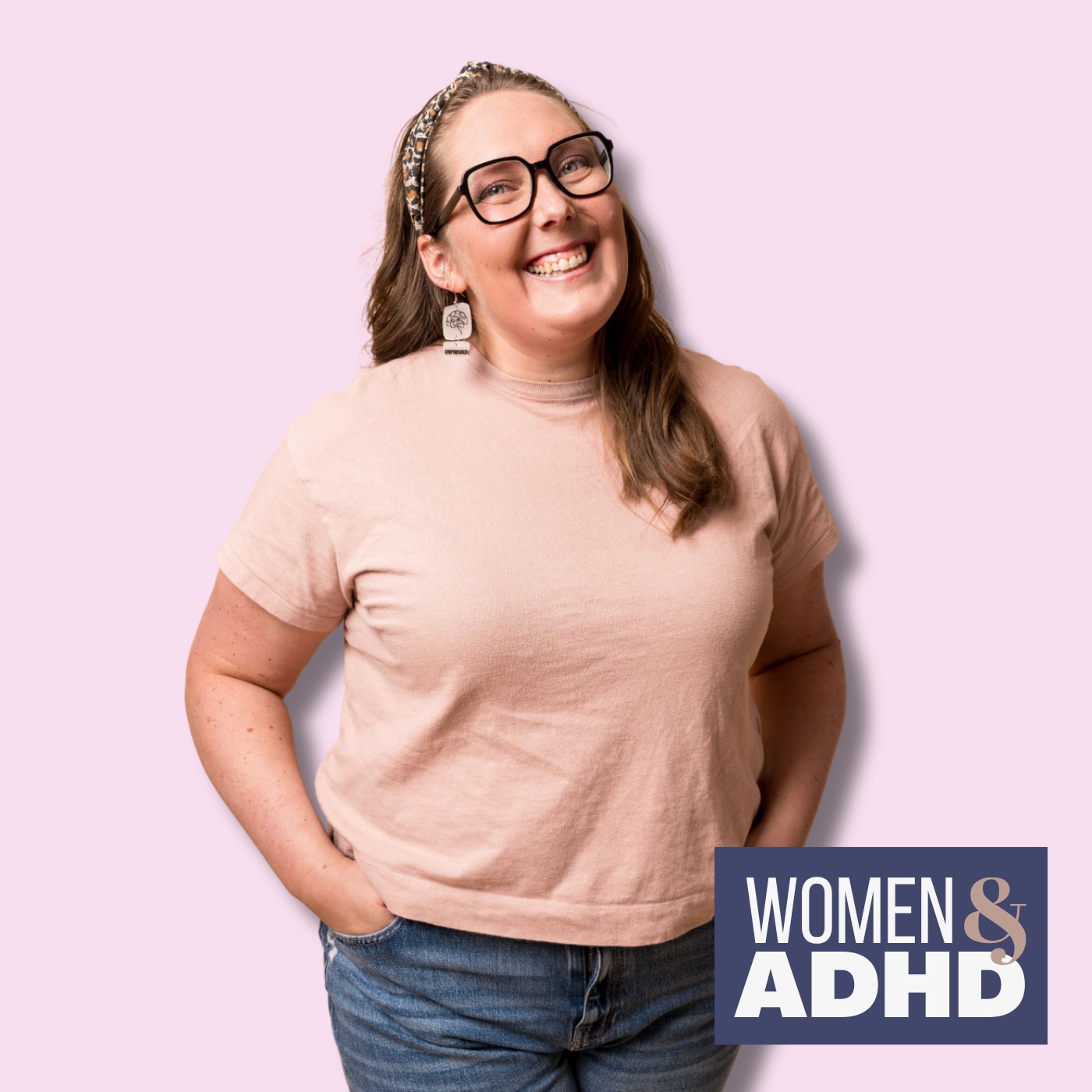
Greer Jones: The relief (and complexity) of an adult diagnosis
About This Episode
Episode 218 with Greer Jones.
Greer is the creator of The Unfinished Idea, a community that supports mamas raising neurodivergent kids. After her son, husband, and later herself were diagnosed, she walked through a dark season of overwhelm, burnout, and isolation. Over time, she discovered people and rhythms that supported her neurodivergent brain, rebuilt her family’s routines, and found the lights that guided her out — community, real stories, and small wins that gave her hope again. Today, she uses her voice, lived experience, and practical tools to help overwhelmed neurodivergent moms feel understood, equipped, and confident in the lives they’re building.
In our conversation, Greer shares what it was like to pursue an adult diagnosis in the UK, advocate for her neurodivergent son, and make sense of the ways ADHD has shaped her life. We talk about the relief of finally having an explanation, the grief and self-compassion that can come with looking back, and why ADHD in women doesn’t always look like hyperactivity on the outside.
We explore what meaningful connection can look like when life is messy, schedules are unpredictable, and nobody has all the answers. And finally, we talk about the Beautifully Wired Summit — a free, three-day online event hosted by Greer, bringing together over 20 experts to share practical, real-life strategies for raising neurodivergent kids. From navigating meltdowns and school advocacy to creating doable daily routines, it’s packed with neuro-affirming tools that actually work. The summit takes place October 5th through 7th, and you can grab your free ticket right now by heading to womenandadhd.com/summit. I’ve also placed that link right at the top of the show notes for you.
Key topics:
- How Greer’s son’s diagnoses helped her recognize her own ADHD
- What Greer’s UK diagnosis process was like
- Why ADHD in women may not match familiar stereotypes
- The relief—and complexity—of receiving a diagnosis as an adult
- Advocating for a neurodivergent child in the school system
- Racing thoughts, emotional intensity, and decision fatigue
- How The Unfinished Idea grew into a podcast, business, and community
- Creating flexible, vulnerable connection for neurodivergent moms
- The Beautifully Wired Summit and its focus on ADHD and autism in girls and women
Website: theunfinishedidea.com
Instagram: @theunfinishedidea
Links & Resources:
- Greer’s podcast: Neurodivergent Conversations
- - - - -
Episode edited by E Podcast Productions
- - - - -
Women & ADHD coaching: www.womenandadhd.com/coaching
- - - - -
Work 1-on-1 with Katy: www.womenandadhd.com/katy
- - - - -
Order the “Hey, it’s ADHD!” course: www.womenandadhd.com/adhdcourse
- - - - -
Did you love this episode? Click here to pledge a one-time donation to the podcast!
- - - - -
If you are a woman who was diagnosed with ADHD and you’d like to apply to be a guest on this podcast, visit womenandadhd.com/podcastguest.
Instagram: @womenandadhdpodcast
Tiktok: @womenandadhdpodcast
Twitter: @womenandadhd
Facebook: @womenandadhd
Advertising Inquiries: https://redcircle.com/brands
Privacy & Opt-Out: https://redcircle.com/privacy
[SPEAKER_01]: I remember him saying we went to a candy shop and he was so excited and he was like, I just can't make a decision. [SPEAKER_01]: And I remember thinking, yeah, I felt that so many times too. [SPEAKER_01]: Like, I'd look at the fridge for dinner and be like, I can't make a decision or what to make for dinner because my brain is just done. [SPEAKER_01]: You know, it's just reached that capacity. [SPEAKER_01]: And so figuring that out and having that make sure of motherhood, I think as well is [SPEAKER_01]: like we said before, there's strands of like what's ADHD, what's motherhood, what's me, what, you know, and they're all braided together.
[SPEAKER_00]: Hello and welcome to the women and ADHD podcast. [SPEAKER_00]: I'm your host, Katie Weber. [SPEAKER_00]: I was diagnosed with ADHD at the age of 45, and it completely turned my world upside down. [SPEAKER_00]: I've been looking back at so much of my life. [SPEAKER_00]: School, jobs, my relationships, all of it with this new lens, and it has been nothing short of overwhelming. [SPEAKER_00]: I quickly discovered I was not the only woman to have this experience and now I interview other women who like me discovered in adulthood they have ADHD and are finally feeling like they understand who they are and how to best lean into their strengths both professionally and personally.
[SPEAKER_00]: Well hello there here we are at episode 218 in which I interview Greer Jones.
[SPEAKER_00]: The Greer is the creator of the unfinished idea, community that supports Mama's raising neurodivergent kids. [SPEAKER_00]: After her son, and then her husband, and later herself, were all diagnosed, Greer walked through a dark season of overwhelm, burnout, and isolation. [SPEAKER_00]: But over time, she discovered people and rhythms that supported her neurodivergent brain, [SPEAKER_00]: She rebuilt her family's routines and found the lights that guided her out, community, real stories, and small winds that gave her hope again.
[SPEAKER_00]: Today she uses her voice, her lived experience, and practical tools to help overwhelmed neurodivergent moms feel understood, equipped, and confident in the lives they're building. [SPEAKER_00]: In our conversation, Greer shares what it was like to pursue an adult diagnosis in the UK, [SPEAKER_00]: advocate for her neurodivergent son and make sense of the way his ADHD has shaped her life. [SPEAKER_00]: We talk about the relief of finally having an explanation, the grief and the self-compassion that can come with looking back, and why ADHD and women doesn't always look like hyperactivity on the outside.
[SPEAKER_00]: We also explore what meaningful connection can look like with life as messy, schedules are unpredictable and nobody has all the answers. [SPEAKER_00]: And finally, we talk about the beautifully wired summit, a free three-day online event that starts today and is hosted by Greer. [SPEAKER_00]: The beautifully wired summit brings together over 20 experts, including me, to share practical real-life strategies for raising neurodivergent kids, from navigating meltdowns and school advocacy to creating doable daily routines at home.
[SPEAKER_00]: It is packed with neuro affirming tools that actually work. [SPEAKER_00]: So it's not too late to join us. [SPEAKER_00]: You can grab your free ticket right now. [SPEAKER_00]: You can find that link in the show notes. [SPEAKER_00]: If you've ever wondered whether you are lazy, overwhelmed, or simply trying to navigate a world that wasn't built for your brain, this conversation is for you. [SPEAKER_00]: So let's get into it. [SPEAKER_00]: Well, hello, Greer. [SPEAKER_00]: Welcome to the Women in ADHD podcast.
[SPEAKER_00]: It's so nice to have you here. [SPEAKER_01]: Thank you. [SPEAKER_01]: I'm excited to be here. [SPEAKER_00]: Well, let's get started. [SPEAKER_00]: You are a neurodivergent mum to neurodivergent kids, and your partner also neurodivergent? [SPEAKER_01]: Yes, yeah, he is autistic. [SPEAKER_00]: ah, got it. [SPEAKER_00]: All right. [SPEAKER_00]: So how did all of this come about? [SPEAKER_00]: Let's see, why don't you walk me through your own kind of diagnosis? [SPEAKER_00]: And I know it was after you had one of your kids diagnosed, correct?
[SPEAKER_01]: Yes. [SPEAKER_01]: Yeah. [SPEAKER_01]: So my oldest, uh, he was diagnosed with ADHD and autism. [SPEAKER_01]: So, [SPEAKER_01]: autism first and then ADHD. [SPEAKER_01]: And when we knew that, you just know, you know, and you're like, yes, this is happening. [SPEAKER_01]: So I started to deep dive, which I now realize was just hyper focusing on, I wanted to learn all the things about ADHD and autism. [SPEAKER_01]: And parenting that and you know, just all those things. [SPEAKER_01]: And so I actually listened to a book by Meredith Cardiard.
[SPEAKER_01]: It all makes sense now and I was, I remember it. [SPEAKER_01]: I was at my kitchen sink doing dishes and she basically described my life and I thought, oh hold on a second. [SPEAKER_01]: How is a stranger just described my whole life? [SPEAKER_01]: Maybe I need to look into this for myself. [SPEAKER_01]: So yeah, that's why I did I, I went and got diagnosed. [SPEAKER_01]: So I am from the US by live in the UK. [SPEAKER_01]: And so the UK system is will different. [SPEAKER_01]: And I did the appointment online and got a letter.
[SPEAKER_01]: That was how I was diagnosed with through a letter that said, do you do have ADHD? [SPEAKER_01]: Here's a link to one website that talks about ADHD, which we'll just say it was a little outdated. [SPEAKER_01]: Talks about ADHD in a very different way. [SPEAKER_01]: So that then kind of led me on my own journey of figuring out what does ADHD look like for me and particularly in girls and women, [SPEAKER_01]: what I was reading and seeing in my son was very different than what I was experiencing.
[SPEAKER_01]: And so I was trying to figure that out. [SPEAKER_00]: Yeah, okay, I have more questions about that, too. [SPEAKER_00]: But like, okay, wait a minute. [SPEAKER_00]: So I know that when we talk about the NHS and when we talk about diagnosis in the UK especially, so usually it's like long weight lines or super long weight list and trying to go to the private route, [SPEAKER_00]: But then also feeling like, if I do go the private route, am I paying for diagnosis, like, do I trust it? [SPEAKER_00]: Do I not write?
[SPEAKER_00]: And so there's like a lot of that turmoil around where it's coming from. [SPEAKER_00]: But are you telling me like you didn't even see a person? [SPEAKER_01]: Yes. [SPEAKER_01]: So I did what's called right to choose, which is free, but you go kind of is slightly down the private route. [SPEAKER_01]: So you go to a certain thing. [SPEAKER_01]: Yeah, it's very weird. [SPEAKER_01]: But yeah, so it was all online. [SPEAKER_01]: So I just see someone. [SPEAKER_01]: It was just their online.
[SPEAKER_01]: It was just like as it was a Zoom call. [SPEAKER_00]: Oh, okay. [SPEAKER_00]: All right. [SPEAKER_00]: Sorry. [SPEAKER_00]: I don't know why I thought you were like filled out a questionnaire and then they sent you a letter and I was like, wait, what? [SPEAKER_00]: Okay. [SPEAKER_00]: That makes a little more sense. [SPEAKER_01]: Yeah. [SPEAKER_01]: So, I mean, I did fill in about five questionnaires. [SPEAKER_01]: It was so in my numbing, um, which I was like, I'm, this is a test.
[SPEAKER_01]: Like, truly, they're testing me right now, seeing like, do I, how long it takes me to fill all these questionnaires? [SPEAKER_01]: And then, yeah, the call itself was three hours. [SPEAKER_01]: She was like, okay, I want you to sit here for three hours and I'm going to ask you loads of questions and I was like, [SPEAKER_01]: Sorry, what? [SPEAKER_01]: Like, again, I was like, is this a test? [SPEAKER_01]: Like, because I don't know if I could do three hours. [SPEAKER_01]: She's like, oh, we can do breaks.
[SPEAKER_00]: That's totally fine. [SPEAKER_00]: I was like, okay, I like, so yeah. [SPEAKER_01]: So I did speak to someone. [SPEAKER_01]: It was just, it was on Zoom. [SPEAKER_01]: So I didn't actually ever see anyone in person. [SPEAKER_01]: And yeah, I highly recommend that if you are in the UK to do the right to choose. [SPEAKER_01]: I filled in a form, sent it to my GP. [SPEAKER_01]: He filled in a form, and six. [SPEAKER_01]: Well, it was about nine months later I had a letter saying I was I was diagnosed with ADHD so and I didn't pay me nine months.
[SPEAKER_00]: Wow. [SPEAKER_00]: Okay. [SPEAKER_01]: So yeah. [SPEAKER_01]: Yeah. [SPEAKER_01]: I know people who have waited years on the NHS and I'm always like right to choose right it's free it's still free it's just it's a lot quicker. [SPEAKER_01]: So yeah. [SPEAKER_00]: Yeah, well, okay, so I want to talk about Meredith Carter because she's also, I love her. [SPEAKER_00]: I, you interviewed her for your podcast too, right? [SPEAKER_01]: Yes, yeah, how was that? [SPEAKER_01]: Yeah, it was so fun.
[SPEAKER_01]: It was great. [SPEAKER_01]: I, I love her. [SPEAKER_01]: I will always think her phrase is like I said, she, I was, I kind of joke that she was like, my, she diagnosed me, obviously she did not, that was, you know, but that kind of reality, that kind of realization. [SPEAKER_01]: I think of 88, she isn't someone who's constantly moving, but 88, she can happen. [SPEAKER_01]: in your, this will sound strange to say, ADHD happened can happen in your brain. [SPEAKER_01]: But in that kind of, it can be eternal and the rushing thoughts or the constantly going isn't normal.
[SPEAKER_01]: I should say, I don't like saying normal, but you know what I mean? [SPEAKER_00]: Yeah, absolutely. [SPEAKER_00]: I had the same experience with, uh, Cerry Sultan, you know, it was just like reading her book and feeling like, oh, my goodness, like this is my, like somebody has peered into my life in a very uncomfortable way. [SPEAKER_00]: and then sorting out like you said like how much of this is you know typical behavior and how much of this is struggle and how much of this is disorder and how much of this is disability and how much of this it like there's so much with an adult diagnosis and like you said like also recognizing yourself in other people who were talking about this and being like oh that's part of ADHD okay didn't know that
[SPEAKER_01]: Yeah, there's so much of that of like, because I, okay, so this is one of my soap boxes. [SPEAKER_01]: It doesn't annoy me when people say, oh, that's my ADHD. [SPEAKER_01]: Like, as if it's an excuse or, oh, I'm a little bit ADHD. [SPEAKER_01]: Things like that, it's like, you're either all or not. [SPEAKER_01]: Like, I know, and I know, I'm not saying people, I'm not saying you shouldn't self like self-identifies ADHD. [SPEAKER_01]: But it's just that like, you can't have a little ADHD.
[SPEAKER_01]: It's like, [SPEAKER_01]: all or not. [SPEAKER_01]: And I get what they're saying. [SPEAKER_01]: Like, I recognize this is me being a little like, but like, it's that kind of, yeah, figuring out what is ADHD, what is struggle, what is, you know, just life. [SPEAKER_01]: Like, I just think sometimes, I think about, you know, when I married my husband, we, I did not know he was autistic then. [SPEAKER_01]: We've only in the last two years or, you know, kind of realized what it was. [SPEAKER_01]: But [SPEAKER_01]: I just think that was still just him like he's always had it, you know, it's not like he's it's ever it's not only just appeared in the last two years, it's just like 80 she's always been there, but it's picking apart like what is.
[SPEAKER_01]: each strand, I guess. [SPEAKER_01]: I don't know if that makes any sense. [SPEAKER_01]: Sorry, I've gone off on a total tangent. [SPEAKER_00]: Oh my god, it makes so much sense. [SPEAKER_00]: I feel like it's all I've talked about for the last six years. [SPEAKER_00]: But yeah, totally. [SPEAKER_00]: And I think again, like, what is irritating about people saying things like, oh, I'm just a little ADHD or like, that's my ADHD or like, this desire to kind of make a flip reference to the wackiness of ADHD discounts.
[SPEAKER_00]: What so many of us really really like struggle with right? [SPEAKER_00]: And I you know, I've always I often say on this podcast like nobody came to their ADHD diagnosis because they were on to the name for this hilarious wonderful superpower that they have right like people come to their ADHD diagnosis because there is they feel like [SPEAKER_00]: things could be better right like they feel like they are in fact really struggling or as I remember my therapist called it like you are walking around with a brick around your ankle and you have been your whole life and what does that mean and I think that's what gets like you know because I'm also irritated by that as well and I'm like what is that about right because I also believe self diagnosis important I also feel like.
[SPEAKER_00]: You know, seeing our lived experiences through TikTok has been tremendously helpful for so many of us and so, you know, when it gets, like, I feel like it needs to be out there and needs to be talked about and also normalized in some way. [SPEAKER_00]: But at the same time, there is something like really irritating about this like giant eye roll. [SPEAKER_00]: I also feel like you get it a lot more in the UK than in the US. [SPEAKER_00]: I don't know if it what it's like going back and forth for you, but like, I'm curious how you see neurodivergence.
[SPEAKER_00]: looked at, you know, I feel like it's treated with a much bigger eye roll and a lot more gaslighting in the UK than there is in the US. [SPEAKER_00]: I don't know. [SPEAKER_00]: Do you notice that? [SPEAKER_00]: Do you feel that? [SPEAKER_01]: Yeah. [SPEAKER_01]: Oh, yeah. [SPEAKER_01]: I definitely get the like, yeah, that the kind of, I don't want to say the flip-itness of it, but like that. [SPEAKER_01]: I mean, so someone asked me, well, why did you get a formerly dying, like, why did you get formerly diagnosed?
[SPEAKER_01]: I was like, because I wanted a piece of paper to tell me it wasn't crazy. [SPEAKER_01]: Like that's the reality. [SPEAKER_01]: Like that was what I
[SPEAKER_01]: They, like, when I said that, they were like, they were kind of shocked. [SPEAKER_01]: And I was like, that's how I feel. [SPEAKER_01]: And I feel like that you said that gaslighting of like the amount of times who have said, and I say it a lot in the UK, like, oh, a lot in the UK, like, how is this a feel? [SPEAKER_00]: Or, you know, different things, like, it's just like, oh, this is, yeah, it's a lot. [SPEAKER_01]: And so, but I will say, there's two things about the UK and the US.
[SPEAKER_01]: I will say awareness, I think, is a little better
[SPEAKER_01]: But I do feel like there were so many hoops. [SPEAKER_01]: I had to jump through to get my son, his diagnosis. [SPEAKER_01]: And it first started with him. [SPEAKER_01]: His speech was delayed. [SPEAKER_01]: And the GP, we went to the GP. [SPEAKER_01]: And I said, he's not speaking. [SPEAKER_01]: I want help. [SPEAKER_01]: Like, can you refer us? [SPEAKER_00]: How old was he at the time just for context? [SPEAKER_01]: He was too. [SPEAKER_01]: OK. [SPEAKER_01]: So he should have been speaking.
[SPEAKER_00]: I had a completely nonverbal son until at the age of two as well. [SPEAKER_01]: Yeah, so it was like, okay. [SPEAKER_01]: And the first thing GP said to me was, well, it's because you're American, and I was like, sorry, what, like, what does that have to do with him not speaking? [SPEAKER_01]: Like, I was like, well, you just say you're just being a different language to him. [SPEAKER_01]: I was like, [SPEAKER_01]: nope try again like i speak English to like yes my accent might be a little different but he's so confused by all of that he had like i know i speak English like i am you know like note i was like try again like please just refer me because like clearly you [SPEAKER_01]: don't really know what was happening.
[SPEAKER_00]: I was told, I was told that my son has a very chatty older sister and probably can't get a word in a choice and that's why he's nonverbal. [SPEAKER_01]: So yeah, yeah, things like that. [SPEAKER_01]: I'm just like, nope, yeah, net try again. [SPEAKER_01]: So we then saw someone and that all worked out. [SPEAKER_01]: He does he does speak, but it just, it's, I mean, even now some of his words are he still has to be therapy and things like that. [SPEAKER_01]: But [SPEAKER_01]: That was when I realized, okay, I didn't realize, realize, but that was like when my brain kind of clicked on, I was like, I'm going to have to fight for my son every step of the way and that's what I've had to do every step of the way.
[SPEAKER_01]: Like we went to school. [SPEAKER_01]: So when he started school, we went early and had a meeting with his teachers and we said, like, we see these needs. [SPEAKER_01]: We're obviously on this pathway trying to get a diagnosis. [SPEAKER_01]: His autism diagnosis hadn't formally come in yet and so we can, [SPEAKER_01]: the school had to, it's very weird. [SPEAKER_01]: But we're on this pathway. [SPEAKER_01]: We really want to work with you. [SPEAKER_01]: Let's work together, blah, blah, blah, blah.
[SPEAKER_01]: And I left that meeting a hundred set feeling like the T-shirts just thought I was a crazy helicopter parent, you know, that it was like, and they're like, oh, we'll see how the first week goes. [SPEAKER_01]: He'll be fine, you know, all this stuff. [SPEAKER_01]: And it was day two of school when I got called in by the principal head teacher. [SPEAKER_01]: And they were like, [SPEAKER_01]: Yeah, we can't really go like so he's going to do two hours a day and I was like, okay, you know, like that was a whole new world and because he just he, you know, he was testing like what's just he loves to test boundaries and so he was in a new place and yeah and they start squat for so it's a lot of play and a lot of free play, which he just does not do well, he needs that structure and so.
[SPEAKER_01]: It was just a lot, it was just a lot. [SPEAKER_01]: And so yeah, that was when I was like, okay, and then that conversation was done illegally. [SPEAKER_01]: I'll just be honest. [SPEAKER_01]: That should have had a lot more different things. [SPEAKER_01]: Part of that, just having it be a little due to ours, like all of that. [SPEAKER_01]: So that was when I really realized, okay, I'm gonna have to be the expert. [SPEAKER_01]: on my son and what he needs and I can't assume that the school will know and I will say the school has gotten a lot better.
[SPEAKER_01]: They have really done some really good work over the last couple of years in a comedy not just my son but other children with additional needs but yeah that was when I was like okay I'm gonna have to do this and that was hard like and just that kind of reality of I've just bought on a new hat like I'm not just [SPEAKER_01]: a mom now I'm a mom who has to like advocate for everything and yeah it's been four years of almost four years of advocating every I go and once a month to trying make sure he's getting what he needs or whatever you know whatever that is so yeah it's a lot.
[SPEAKER_00]: Yes it is. [SPEAKER_00]: I do feel like in some ways [SPEAKER_00]: It is a lot to advocate for kids in the school system. [SPEAKER_00]: And I'm just so grateful for my own diagnosis because I feel like it has helped me be a step better parent. [SPEAKER_00]: I don't know, it's hard to, it is really difficult, but I also kind of feel like what would have, how would life be if we didn't have this understanding and knowledge? [SPEAKER_00]: Like, I don't know, I sometimes shutter at the thought of some of the things I did before, I had to really more awareness and understanding about neurofortunes.
[SPEAKER_01]: Yeah, there's definitely things that I'm like, oh, other things that I'm like, there's two pathways I think about it's like one of like, oh, that was yes, I can see my my 80 she brain was in that, you know, just with some of the Not impulse stuff, but you know, just I mean starting starting my podcast, I literally woke up when I was like I'm starting a podcast, you know, like that, but then also like yeah, some of the [SPEAKER_01]: I have, I do have a strong sense of justice. [SPEAKER_01]: And so some of that, I'm like, oh, yeah, that was not like cringe, but just that kind of like, oh, yeah, I could have, now that I'm more aware, I know I could probably handle that a little different, but we learned and move on.
[SPEAKER_00]: Exactly, right? [SPEAKER_00]: And I think that's been really helpful too. [SPEAKER_00]: Like I always say, the version of me, I most want to go back and give a hug to, is the version of me that had babies because, [SPEAKER_00]: I was so struggling and so overstimulated and I felt like I was asking for help but not really knowing how and you know like it just felt like I was so in the weeds during that period of time and yeah I just knowledge is power and like you said now I'm you know I feel I feel sad for that version of me but also like I said I was doing the best I could and I think that's super helpful yeah.
[SPEAKER_00]: So now you were mentioning like, obviously the neurodivergent symptoms or traits that you saw in your son, you didn't necessarily relate to or did you? [SPEAKER_00]: Like, how did you kind of find your own path to understanding like how neurodivergent looked for you? [SPEAKER_01]: Yeah, so I would say my son is the classic, so autism is a little different. [SPEAKER_01]: Like he autism still is something that's, we're still, obviously, we're still learning about both. [SPEAKER_01]: With ADHD, there's just so much more research I feel like out there that he's a classic ADHD boy if that makes sense.
[SPEAKER_01]: Like he is moved. [SPEAKER_01]: He moves on from things. [SPEAKER_01]: He is always on the go. [SPEAKER_01]: He is Like constantly. [SPEAKER_01]: Like even when he went out one, I remember we went to I went to this conference and they had a nursery crash. [SPEAKER_01]: whatever. [SPEAKER_01]: And the one of the workers like, oh, he's like an energizer bunny. [SPEAKER_01]: And I'm like, yes, like, this is my life. [SPEAKER_01]: He's always on the go. [SPEAKER_01]: Because of that, I would see little thing like how you reacted to things.
[SPEAKER_01]: I would sometimes see in me and just that big emotion, like attachment to things or, um, [SPEAKER_01]: I remember like he, he and I cry the same movies like I cried Disney movies because I just get so even though I know the ending, I know the ending, I still am like oh my like we went to our toy store five, he and I both cried like we were I was like I know the ending is going to be okay but like yeah I was just emotionally invested in these toys and I will say Toy Story holds a very special place in my heart like having grown up with that kind of [SPEAKER_01]: series, like I said, yeah, um, and so things like that, I would notice myself in, but it wasn't what I was kind of reading as oh, that's ADHD, you know, that, that kind of, again, because he's like classic boy ADHD, I was like, oh, I must not have that, it must just be where emotional people, you know, or just kind of, that, and so it wasn't, yeah, like as I tell kind of reading, Meredith's book of, all right, okay, the rushing thoughts that are happening [SPEAKER_01]: always say I have a million thoughts a day, you know, those kind of internal things or the big emotions or things like that was like that is also ADHD, you know, that is a strand of ADHD.
[SPEAKER_01]: And so that was when I was like, okay, this is this is me. [SPEAKER_01]: This is where I fit into the ADHD umbrella is kind of what I like to call it. [SPEAKER_01]: And yeah, kind of seeing, oh, yeah, we do have those connection points of like emotions and things like that, but then also. [SPEAKER_01]: Yeah, I remember several times as well like the decision fatigue, which again, I was like is just just motherhood like I have to make five million decisions or is this decision paralysis, you know, like I think it's a mixture, but like he would I remember him saying we went to a candy shop and he was like so excited and he like I just can't make a decision like and I remember thinking yeah, I felt that so many times too like I'd look at the fridge for dinner and be like I can't make a decision or what to make.
[SPEAKER_01]: for dinner because my brain is just done. [SPEAKER_01]: It's just reached like a positive. [SPEAKER_01]: And so it's like things like that that I found I was able to connect with him. [SPEAKER_01]: And like he said, I've been able to empathize with him a little bit, you know, like because I get it, I get what that means, but then also figuring that out. [SPEAKER_01]: And having that make sure of motherhood, I think as well is, you know, like we said before, those strands of like what's ADHD, what's motherhood, what's me, what's, you know, [SPEAKER_00]: And they're all braided together and so well, and we also get told things like you just need a good night sleep right so there's like always this sense this carrot that's been placed where it's like things will get better things will get better and then they don't and kind of like okay now what so I don't feel like it's happening out of nowhere, but yeah you know it's interesting because I kind of had a similar feeling of [SPEAKER_00]: You know, and when I first started this podcast too, I was always like talking about alternate names for ADHD because I think for me it was the hyperactivity element which was the, you know, I just didn't relate to because what I was seeing as paralysis, you know, what, what I now know was was paralysis and just the mental load and exhaustion from from racing thoughts.
[SPEAKER_00]: I was interpreting that as laziness, right? [SPEAKER_00]: I was interpreting that as I'm tired all the time, I can't cut off the couch, I never get anything done. [SPEAKER_00]: So like for me, that was laziness and I think for a lot of people that's we sort of interpret that as being lazier and motivated, which to me I then thought was the opposite of hyperactivity. [SPEAKER_00]: I thought of hyperactivity as like productivity and you know getting lots of things done. [SPEAKER_00]: And now I like oh yeah it's all really about the interpretation and how we are defining that internalized hyperactivity.
[SPEAKER_00]: Yeah, but I think, you know, for so many of us, I think that was such a deterrent, you know, in the name hyperactivity. [SPEAKER_01]: Yeah. [SPEAKER_01]: Yeah. [SPEAKER_01]: I would say now my hyperactivity is my brain, not my body, and that idea that it's, it is always going. [SPEAKER_01]: I would say as well, like if my eyes are open, my brain is going, and it doesn't stop. [SPEAKER_01]: It just doesn't stop. [SPEAKER_01]: That seems to have helped me in
[SPEAKER_01]: Like you said that when I need a rest, it's not because I've ran a marathon, but it's because my brain is ran a marathon. [SPEAKER_01]: And so I just need I need to rest like not easy. [SPEAKER_01]: Don't get me wrong. [SPEAKER_01]: I still had to bite through that like giving myself rest and it's okay. [SPEAKER_01]: I don't have to earn it whole, you know, conversation, but yeah, I find for me kind of that hyper activities in my brain versus my body, which for so long is what I thought that's what.
[SPEAKER_01]: That was. [SPEAKER_00]: Yeah, absolutely. [SPEAKER_00]: Alright, so then how, let's talk about the unfinished idea because I sort of have a similar story where I was like, I got diagnosed and then I was like, we talked about this on your podcast where it's sort of like, I just wanted to excuse to talk to other women and it just felt like the right thing to do and, you know, it's been an incredible journey for me, just in learning, right? [SPEAKER_00]: I think it's like, oh, this is how I learned best, you know, the lived experience and [SPEAKER_00]: kind of just exploring what other people's experiences are.
[SPEAKER_00]: And so, you know, it sounds like you have a similar experience with your podcast where you're like, yeah, let's do it. [SPEAKER_00]: Not really putting any thought into it. [SPEAKER_00]: But everything about you, like, you're, I don't know, what were you doing before you started the unfinished idea because it's very [SPEAKER_00]: polished and, you know, it's just, it's, it certainly doesn't look slapped as so I'm like, do you have a marketing background or are you, you know, do you know, what was your background?
[SPEAKER_01]: So I have a background in events and communications. [SPEAKER_01]: So yeah, and I have a lot of friends who are in communications, [SPEAKER_01]: so web design, podcasting, my best friend. [SPEAKER_01]: I always tell her she's really the one I should be paying every like every month because she does web design but then she also hosts a radio show and things like that so she came me all the top tips so things so yeah so [SPEAKER_01]: Yeah, there's there is that. [SPEAKER_01]: I will say.
[SPEAKER_01]: I have that. [SPEAKER_01]: But yeah, I, it really started. [SPEAKER_01]: I started sharing stuff on social media first of like when I son was first diagnosed. [SPEAKER_01]: So when he was diagnosed, we started the pathway when he was three. [SPEAKER_01]: He formally got diagnosed about a year later. [SPEAKER_01]: But, and I'll just say nursery were horrible. [SPEAKER_01]: They, they were horrible. [SPEAKER_01]: They would tell me regularly. [SPEAKER_01]: I was a horrible parent. [SPEAKER_01]: They would tell me my child was out of control and just this this wasn't autism.
[SPEAKER_01]: This is just him not having boundaries and all this other stuff and so I just started sharing because I was like There has to be other autistic like moms raising kids with autism out there. [SPEAKER_01]: You know like and I didn't know the statistics at the time when I Started but just like there has to be other people Out there right you know it's like okay. [SPEAKER_01]: I can't be the only one so I just started sharing online and loads of people [SPEAKER_01]: to start messaging me saying like, oh, yeah, we're experiencing this too, or, you know, yeah, my son has autism, or, you know, just different things, and I was like, okay, I found my people.
[SPEAKER_01]: I got to basically felt like one boy was like, I got my people. [SPEAKER_01]: And then I was, but then I found social media to be a little dark sometimes. [SPEAKER_01]: As we know, it can go, you don't say. [SPEAKER_01]: Yeah, it can go the wrong way. [SPEAKER_01]: And I just was like, I want to, I felt like I was learning a lot,
[SPEAKER_01]: judge, you know, all the things, all the things social media is, and don't get me wrong. [SPEAKER_00]: I think it can be some beautiful things, but [SPEAKER_01]: beauty comes pained. [SPEAKER_01]: So I was like, okay, I want to share things in a different way. [SPEAKER_01]: And I literally woke up one day. [SPEAKER_01]: I was like, I'm starting a podcast. [SPEAKER_01]: Like I listened to podcasts. [SPEAKER_01]: I learned from podcasts. [SPEAKER_01]: And I was like, and I can interview people because I went talk to these people was basically kind of what I wanted.
[SPEAKER_01]: And so, so yeah. [SPEAKER_01]: So I just started kind of asking people was like, I kind of started recording. [SPEAKER_01]: So I did some like kind of back recording. [SPEAKER_01]: And in that process, then it was like figuring out what I didn't even have a name, the first three people I interviewed, I didn't even have a name for my podcast, they were so sweet to be willing to be interviewed because I was like, I don't have a name for this yet, but yeah, so when I started, I called it then finished idea just because it felt there's others a lot of strands to it, but it's it was my unfinished idea, basically, and that's kind of what my brand.
[SPEAKER_01]: What my brand is, it's just kind of that we're all unfinished, we're all learning, we're all on this journey kind of idea. [SPEAKER_01]: And so that's how it started is now kind of I love over the last it's now going for almost two years, how it's like been molded and shaped and. [SPEAKER_01]: It's had a name change to NerdEvergent Conversations. [SPEAKER_01]: Because that's what I realized I was having was like these conversations and just, I don't know. [SPEAKER_01]: It's been really fun to see shape and mold.
[SPEAKER_01]: And like I said, I plan to just start a podcast. [SPEAKER_01]: And that was it. [SPEAKER_01]: And then from there, people were asking for meet-ups. [SPEAKER_01]: So I started doing kind of these monthly Zoom meet-ups that then kind of turned into, now I have a membership community online as well as like, [SPEAKER_01]: kind of different things that kind of snowballed. [SPEAKER_01]: So it was me going, I'm just going to do a podcast to like two years later, I now have, it's my business.
[SPEAKER_01]: It's my, it's now my job. [SPEAKER_01]: So, which is cool, and I love it. [SPEAKER_01]: And love how I've been able to shape it. [SPEAKER_01]: Like I always, when I start the podcast, someone's like, oh, you're going to start a business. [SPEAKER_01]: Like, and I was like, no, no, no, no, like I'm not going to do that. [SPEAKER_01]: Um, but now that I have, I'm like, why did I do that earlier? [SPEAKER_01]: Like, it fits my brain, it fits my schedule, like, and I could be with other, like my whole job is now getting to be with other moms who are raising or diverging kids, which it's just so freeing that I don't have to explain all the time what's happening in our house.
[SPEAKER_01]: Because everyone else gets it. [SPEAKER_01]: So yeah, one of the most ADHD things I've done, um, not the only one. [SPEAKER_01]: Let me just be clear. [SPEAKER_01]: I. [SPEAKER_01]: moved countries when I was 21. [SPEAKER_01]: That's the other, I always look back and think, this is probably the two most ADHD decisions I've made. [SPEAKER_01]: But yeah, here we are, and I love it. [SPEAKER_01]: And I love that I can. [SPEAKER_00]: I also just up and moved from one country to another.
[SPEAKER_00]: I was a little bit older, I was 26, but yeah, that's definitely on my checklist of the signs where they're all along. [SPEAKER_00]: So yeah, how did you end up in the UK? [SPEAKER_01]: So I went to do a year internship.
[SPEAKER_01]: I finished university college early because I did I did summer school and all the things again I again like another IDG sign is like I love learning and love hyper fixating on things and so I'll like. [SPEAKER_01]: I did, I have several degrees because I was like, I'm just gonna get a degree in that, I love that. [SPEAKER_01]: So yeah, so I was just like, oh, I'm gonna go to England for a year, it's close to Europe, so I can do some travel. [SPEAKER_01]: And then 15 years later, I'm still in England.
[SPEAKER_01]: And, you know, married, married a Brit. [SPEAKER_01]: We have two kids, we just renovated our house. [SPEAKER_01]: So my husband's like, we are not moving. [SPEAKER_00]: And until we get the full benefits of this house that we lived in the middle of the renovations for about
[SPEAKER_00]: Yeah, that's sort of similar to I tell people because I'm originally from Canada and I moved to the States and then got married and fit, you know, fell in love got married and now we have kids and people are like why don't you move back to Canada usually like every four years when there's a new presidential election or people are like why don't you move back what do you do here why don't you move to Canada if you could go to Canada and I'm like I'm trapped here. [SPEAKER_00]: Yeah, I will say New York is a wonderful state to live in, so, but yeah, it's a little more complicated than just picking up and moving somewhere.
[SPEAKER_01]: Yeah, definitely. [SPEAKER_01]: That's cool. [SPEAKER_01]: I mean, I get asked all the time as well. [SPEAKER_01]: Isn't America so much better or isn't like, or really, you know, now what did I live in England like it's so small and I'm like, but there's a lot of things like a lot of things, but also like, I was like, my kids live here, my husband's here, he would have to retrain like it's, it's not easy just getting on a plane like I can't just pack up my boxes and [SPEAKER_01]: and get on the plane because he's not a U.S.s.
[SPEAKER_01]: and so my kids aren't, but he's not so even that would be of like, yeah, it's [SPEAKER_01]: It's a whole thing that's going to cost thousands of dollars, so no. [SPEAKER_00]: I hear you. [SPEAKER_00]: Yeah, I really love what you were talking about with the unfinished idea, because I feel like, you know, not only do I relate to that, and I call it the patchwork quilt of looking back over your life, over all of these random certifications of degrees and jobs that all kind of now in retrospect make perfect sense to who you are.
[SPEAKER_00]: of just being unfinished right that there is no like what is your niche or what is your you know who are you what is your identity and knowing that that's always going to be changing and it's always going to be evolving and I think it's one of the beautiful things about having an interest-based mind is that like we are sustained by that constant need for self growth and development and you know it's really nice to have a stable partner who's supposed to
[SPEAKER_00]: But you know, I'm like, I bring the entertainment. [SPEAKER_01]: That's what I always say. [SPEAKER_00]: But like, yeah, it's just a really, it's a really nice way of framing. [SPEAKER_00]: I think what is one of the core strengths of having a neurodivergent, especially in ADHD brain, which is just like. [SPEAKER_00]: Yeah, it's it's going to be morphing. [SPEAKER_00]: It is never finished and yeah and even as you were talking I was thinking about like sometimes I get blown away by the fact that when I started this podcast I had just been diagnosed right so it was sort of like it was my hyper focus and I was having these conversations and I was kind of like I'm just going to keep doing this until I don't want it anymore and then like you said It was like oh and then I started getting a following and then I suddenly became a business and I created these communities of people and [SPEAKER_00]: And then I, you know, for through those communities, it was women who were saying, like, do you know any therapist who understand what it's like to live with ADHD or what it's like to be diagnosed as an adult and I was sort of like, no, you're right.
[SPEAKER_00]: I don't really know very many, but I've always wanted to become one and like I went back to school to become a therapist, but I also know that like I never would have gone to grad school if it wasn't for my ADHD diagnosis because I never would have [SPEAKER_00]: like I just, I was a disaster in my undergrad and it was really, really hard. [SPEAKER_00]: I say I'm a disaster. [SPEAKER_00]: I was on the Dean's list. [SPEAKER_00]: I don't, that's such an ADHD thing to say. [SPEAKER_00]: I was literally on the Dean's list and my last year I kind of got a bunch of F's.
[SPEAKER_00]: So there's that pendulum. [SPEAKER_00]: but it was complicated, right? [SPEAKER_00]: As many things are. [SPEAKER_00]: But yeah, it wasn't until I sort of felt like, oh, I could actually do this. [SPEAKER_00]: I could go back to grad school now knowing who I am and how I think and be able to do this correctly and do this in a way that feels sustainable. [SPEAKER_01]: But it's, you know, really it's because of this podcast that like, they've kind of blows me away sometimes. [SPEAKER_00]: Anyway, just thank you for that little like cathartic moment.
[SPEAKER_00]: But it is great, like I think it is, I think for, you know, I think sometimes people joke about like how we make this, we make this diagnosis our entire identity and I think sometimes it really, like it's just hard to articulate how life changing and empowering and. [SPEAKER_00]: Yeah, just how.
[SPEAKER_00]: I don't even know what word I'm looking for, but yeah, it is really just profound. [SPEAKER_01]: Yeah, no, I mean, it is, I look, I mean, I have to say that really weirdly, it's not weird, but it is weird. [SPEAKER_01]: In my office, I have that letter that says I have ADHD. [SPEAKER_01]: It's framed. [SPEAKER_01]: And my husband's like, the things I hang on my wall on my office, it's my space. [SPEAKER_01]: He can't say anything everywhere else in the house. [SPEAKER_01]: He can have a opinion on, but my office is my, my space.
[SPEAKER_01]: And he just is like, the things I have hanging in that room. [SPEAKER_01]: He's like, oh my gosh, Greer, like, you need friends. [SPEAKER_01]: But, but I have it because it is, [SPEAKER_01]: Like I said earlier, if that piece paper says I'm not crazy, because that is how I felt like for so much of my life was I was crazy. [SPEAKER_01]: I was too much. [SPEAKER_01]: I was so many, you know, there's so many things that we could say that we've been told. [SPEAKER_01]: But that piece paper goes no actually I belong to this community.
[SPEAKER_01]: I belong to these people so to speak. [SPEAKER_01]: And you know, that idea of it being identities is part of who I am. [SPEAKER_01]: So it is part of, [SPEAKER_01]: my identity and how I work and I think I'm not saying you have to own it but like I think people owning it I'm like yeah let's own it because let's show them how amazing this is and how you know having ADHD you know we can normalize it but also [SPEAKER_00]: It brings so much beauty into the world, you know, well, and it also weaves through literally every part of my life right like it's it's there in everything which might also contribute to why it's irritating when people make flip remarks like I'm a little ADHD like I [SPEAKER_00]: I'm like, if you don't feel your ADHD from the moment you wake up to the moment you go to bed, like, what's that about?
[SPEAKER_00]: Like, I want to know more about that because I feel like I'm not to doubt somebody's life experiences, but I also feel like there is a way where [SPEAKER_00]: you know that that profundity of of the adult diagnosis is seeing how it has woven through your entire existence in a way that is both grieving and also beautiful and and wonderful and all the things like like you know I'm like like I want to cry right now like Toy Story because I'm thinking about like that that swell of emotion right of just how beautiful and and beautiful and sad and
[SPEAKER_01]: Definitely, yeah. [SPEAKER_01]: My whole life, I felt like I, I stood out, which some of that is I'm six foot, so I am pretty dull. [SPEAKER_01]: But how, like, he was just saying, like, I've had to grieve that a little bit, but then I've also seen the beauty in that and how my brain, the way it's been wired, has shaped my life and having that beauty. [SPEAKER_01]: So, yeah, I was just just disagreeing with what you were saying. [SPEAKER_00]: Well, and my experience also was like, how do I figure out, you know, because I talk about like one thing that so many of us have in common who are diagnosed in adulthood or even not diagnosed in adulthood, is this sense of what's wrong with me, right?
[SPEAKER_00]: So there's this otherness, there's this difference. [SPEAKER_00]: And I certainly experience, I don't say I think everybody who gets an adult diagnosis experience this, but I like had like a deep sense of loneliness throughout my life too, even though I was married and even though I had friends
[SPEAKER_00]: I was always searching for something and I think you know like it was community or something But I used to like feel like why am I so lonely like I don't you look around Then it doesn't feel like you should be like what's going on and so I've been very fascinated by community building too Because I've kind of built communities over the years and then I haven't been able to keep them up And I let them forget you know like there's a lot of work in in maintaining that engagement But I also feel like ADHD women especially.
[SPEAKER_00]: It's like hurting cats [SPEAKER_00]: Because everybody comes in and is super excited. [SPEAKER_00]: Oh my god, this is amazing. [SPEAKER_00]: And then we forget it exists. [SPEAKER_00]: And then everybody kind of wanders off. [SPEAKER_00]: So I personally, like, I feel like wonderfully connected to a lot of women, even if like, I've only met them and talked to them for an hour. [SPEAKER_00]: Or, you know, we've like exchanged a few DMs. [SPEAKER_00]: Like I feel very close to people.
[SPEAKER_00]: And I think, [SPEAKER_00]: I guess what I'm trying to say is like my idea of connection and community and friendliness is very different now than it might have been before my diagnosis where I've been like, yeah, you know what like this is how you communicate and this is how you find connection it's very different than another neurotypical way.
[SPEAKER_00]: How have you found community building to go? [SPEAKER_00]: Do you have tips on how to make it work? [SPEAKER_00]: Or is it just an unfinished idea that is constantly evolving? [SPEAKER_01]: Yes, I would definitely say it's constantly evolving. [SPEAKER_01]: I will say because I work a lot with moms showing up live to anything is just not always possible. [SPEAKER_01]: And so I find [SPEAKER_01]: if there's any way that I can make it so that there's a replay or they can come in, we can chat like, I mean, I do a lot of boxer type conversations because they can send a note, I can send a note, whenever it works.
[SPEAKER_01]: Like, and I think that to me is community is just showing up in the messy middle. [SPEAKER_01]: So if that means, you know, yeah, like I still sound slightly unhinged, [SPEAKER_01]: met someone online. [SPEAKER_01]: She listened to the podcast. [SPEAKER_01]: Email with me was like, I think we'd be friends. [SPEAKER_01]: I have no one in my circle, we're in this really, you know, explain to a lie story, which was totally okay. [SPEAKER_01]: And we, I said, oh, let's, you know, I have this, this community, you know, do you want to join by the law?
[SPEAKER_01]: I then have, I went a couple of weeks ago to her house. [SPEAKER_01]: for four days, like I got on a plane, went to, went to Detroit and was like at her house for eight days because I was like, we, we've grown that community which my husband was like, hold on a second. [SPEAKER_01]: You're getting on a plane to go to a complete like stranger. [SPEAKER_01]: Like we have, we have met a few times like uncles, but you know like that kind of like strangers house staying in their shed basically, which is, they've turned into like an air bean bee.
[SPEAKER_01]: So it's not like a, [SPEAKER_01]: And actual shit, but you know what I mean, like to just be with them and hang out with them and you know, just share life with them And I was like, yes, I'm doing everything the world tells us not to do and he's like, you worried you're gonna get catfish Like are you worried they're gonna like lock you up and that's what I'm like well, no, I've seen her I have seen her in person. [SPEAKER_01]: I know what she looks like you know, it's like Or not in person, but like on his name call, um, but yeah, and I think to me like That's community.
[SPEAKER_01]: You know, I'm not saying everyone should get on the plane to go [SPEAKER_01]: don't need a stranger, but that kind of, I think, I was like, you know what, that'd be fun. [SPEAKER_01]: Like, that sounds, I can come into the messy middle. [SPEAKER_01]: And so that's, I guess, trying to find ways to meet in the messy middle is always what I kind of say. [SPEAKER_01]: So I have, yeah, I do a lot of what's often boxered type stuff because, again, you can just, and it doesn't matter about time zones.
[SPEAKER_01]: That's the other thing is, I find, yeah, I have people all over the world, which is so fun. [SPEAKER_01]: But the time in Australia is never going to work for the time in the US and the time in the UK and all of that. [SPEAKER_01]: And so yeah, I just find being able to do that. [SPEAKER_01]: And I think the other thing is. [SPEAKER_01]: My husband always says, I'm like a barn door, like I open up, and I just let everything out. [SPEAKER_01]: Like I'm an open book, but basically as wise, it's what Americans would say.
[SPEAKER_01]: I'm an open book, whereas he always then says British people are like a bathroom window. [SPEAKER_01]: They just let a little bit of information out. [SPEAKER_01]: That's what he did. [SPEAKER_01]: And I'm like, yes, that is very true. [SPEAKER_01]: That's a very true example. [SPEAKER_01]: But, and so I think as well, because I'm, [SPEAKER_01]: like a porn door sounds so that sounds so weird nothing that but um i'm an open book um i i'm also vulnerable with people like i don't pretend to have all the answers or so we we have like discussion threads and i'll share on there and be like this is really hard today guys like i i know i know all the techniques but right now they've just gone up the window and i just need someone to say it's gonna be okay because this is really hard you know um and
[SPEAKER_01]: helps them to be vulnerable. [SPEAKER_01]: And that's where connection is made. [SPEAKER_01]: And so I always say, you know, I can British people are very interesting. [SPEAKER_01]: And I won't lie. [SPEAKER_01]: I have used many times the I'm just the crazy American excuse for things, but like the amount of cups of sugar I've asked my neighbors for so that way I can just have a conversation with them because I'm a big believer that you should know your neighbors. [SPEAKER_01]: I don't need sugar like they probably think I have some type of disease or like something because I'll just go around and do like oh do you have some sugar I could use like and then I get to start conversation with them and get to share life with them and you know we've built we have kind of a little little we're in like a coldest act and we've all we've now gotten to know each other and one lady said it was a couple weeks ago when when we headed to the US for a few weeks she was like oh we're gonna miss you like [SPEAKER_01]: because you're the one who brings this all together.
[SPEAKER_01]: So, you know, it's that kind of, I guess that's what I say is like, just is all because I ask for sugar to all these houses who all probably think. [SPEAKER_01]: we just don't have a browser, but, you know, just that, yeah, I guess all that to say is be vulnerable. [SPEAKER_01]: And you don't have to be like 100% vulnerable, don't lie. [SPEAKER_01]: But, you know, you know, but just share a little bit. [SPEAKER_01]: And then they will share a little bit and then you can share a little bit more.
[SPEAKER_00]: I love that. [SPEAKER_00]: That's really pretty. [SPEAKER_00]: That's really pretty. [SPEAKER_00]: It's a really nice sentiment about I think there are personalities that bring other people together. [SPEAKER_00]: And I think that it's a gift and grateful for people in the world who do that. [SPEAKER_00]: So join Greer's community and she's going to come sleep on your couch for a couple days. [SPEAKER_00]: That's what we've learned from this. [SPEAKER_01]: Yeah, it's like, that's how I go in holidays.
[SPEAKER_01]: I just like,
[SPEAKER_00]: If this sounds like you're doing the cat fishing. [SPEAKER_01]: Yeah, I was like, I did dishes. [SPEAKER_01]: I did dishes as well as there. [SPEAKER_01]: I pulled it some laundry. [SPEAKER_01]: So you know, it's not just me hanging out. [SPEAKER_00]: It's usually better fishing. [SPEAKER_00]: Yeah, you do chores. [SPEAKER_00]: I love it. [SPEAKER_00]: Okay, so let's talk about the beautifully wired summit. [SPEAKER_00]: Is this your first summit? [SPEAKER_01]: No, this is my, I say second and a half.
[SPEAKER_01]: Okay, my five. [SPEAKER_01]: I co-hosted one about a year ago with a friend. [SPEAKER_01]: And that was great. [SPEAKER_01]: Everyone asked me why we don't co-host again. [SPEAKER_01]: It's just our schedules. [SPEAKER_01]: She's in the US. [SPEAKER_01]: I'm in the UK. [SPEAKER_01]: Our schedules are just haven't worked out. [SPEAKER_01]: And then I hosted another one on my own in May. [SPEAKER_01]: And then now here in October, we have the other beautifully wired summit, which I am so excited about [SPEAKER_01]: as I said, it's all about ADHD and autism and girls and women and that is something that I'm really passionate about and so yeah, I'm excited that I get to bring in all these experts to share their knowledge because I don't know.
[SPEAKER_00]: Yeah, yeah, to tell us a little, so it's starting this week, so tell us a little bit about how many experts are there, what can people expect? [SPEAKER_00]: And hopefully people are registered but it can sort of still register at this point correct. [SPEAKER_01]: Yes, yes. [SPEAKER_01]: So it's all done online. [SPEAKER_01]: So it's all virtual, no, and I remember someone asking me like, it doesn't say where I need to go. [SPEAKER_00]: And I'm like, it's all online. [SPEAKER_00]: You don't need to go anywhere.
[SPEAKER_01]: But yeah, so it's all online. [SPEAKER_01]: It's we have 22, I think, now 22, 23, 24, around there. [SPEAKER_01]: Different experts coming and talking about [SPEAKER_01]: Yeah, ADHD, hormones, as a neurodivergent, teen, and woman, I have some coming and talking about menopause, which I'm not there yet, but I'm like, yes, I need to know all this. [SPEAKER_01]: So, yeah, as well as, I'm trying to think, there's so many. [SPEAKER_01]: It's a whole, I've tried to think about the three days are kind of broken up into understanding, supporting, and celebrating our kind of brains and wanting to [SPEAKER_01]: to really create a space where moms who are raising neurodivergent girls or our neurodivergent themselves can come and just be in community with each other and kind of not have to explain all the things all the time.
[SPEAKER_01]: But also learn together, I think there's power and learning together. [SPEAKER_01]: And so yeah, so like I said, it's all done online. [SPEAKER_01]: The sessions themselves are pre-recorded, but we have some really fun live elements happening kind of at different [SPEAKER_01]: throughout the day. [SPEAKER_01]: So people can join in. [SPEAKER_01]: I, in my previous job, I was classed as the cheermaster, which if you know the Grinch, which is my favorite Christmas movie, then you'll know where that comes from.
[SPEAKER_01]: But basically, I was like the fun queen. [SPEAKER_01]: And so I love to make sure we have fun as well. [SPEAKER_01]: So every evening, depending on where you are in the world, we'll have fun together because I think that's important to, you know. [SPEAKER_01]: as moms, as women, you know, to have fun as well. [SPEAKER_01]: So, yeah, I'm excited. [SPEAKER_01]: I love it. [SPEAKER_01]: I love it. [SPEAKER_01]: I get such, I don't know if I should say I get such a high from it, but like, I do because I, you know, I get to meet people, I get to chat with people, and we get to learn.
[SPEAKER_01]: My parents are teachers, my whole family are teachers, so I'm always learning. [SPEAKER_01]: And I love that. [SPEAKER_01]: So, yeah, it's, I'm trying to [SPEAKER_01]: of like you can definitely sign up until the end of the summit. [SPEAKER_01]: There's replays for 48 hours or you can get the VIP pass if you want as well. [SPEAKER_01]: So it is free to sign up and get all of this. [SPEAKER_01]: And yeah, I'm excited. [SPEAKER_01]: So please join if you haven't already signed up. [SPEAKER_01]: Yeah, it's not today.
[SPEAKER_01]: Yeah, I'll definitely have links in the show notes. [SPEAKER_00]: Well, I mean, it's been wonderful getting to know you through this summit, too. [SPEAKER_00]: And I think, you know, it's the same feeling of like, I just feel, you know, very close to my guess. [SPEAKER_00]: I love being vulnerable and hearing each other's stories. [SPEAKER_00]: And, you know, and if you ever want to come sleep on my couch and the husband's belly, you're more than welcome. [SPEAKER_01]: I don't have an airfield b-shed, but yeah, it's like, I'll email you about that.
[SPEAKER_01]: Give my nicks, make sure it's travel plans, it's cool, so. [SPEAKER_00]: Yeah, I don't know, as long as you do dishes, that's one thing I was very appealing. [SPEAKER_00]: But yeah, it's been super what I love what you're doing and the sense of community that you're building on both sides of the pond and thank you so much for sharing your story. [SPEAKER_00]: It's been a real joy. [SPEAKER_01]: Yeah, thank you for having me. [SPEAKER_01]: I was I was love getting to talk about this so thank you
[SPEAKER_00]: There you have it! [SPEAKER_00]: Thank you for listening and I really hope you enjoyed this episode of the Women and ADHD podcast. [SPEAKER_00]: If you'd like to find out more about me and my coaching programs, head over to women and ADHD.com. [SPEAKER_00]: If you're a woman who was diagnosed with ADHD and you'd like to apply to be a guest on this podcast, visit women and ADHD.com slash podcast guest and you can find that link in the episode's show notes. [SPEAKER_00]: Also you know we ADHD are great feedback.
[SPEAKER_00]: And I would really appreciate hearing from you, the listener. [SPEAKER_00]: Please take a moment to leave me a review on Apple podcasts or audible. [SPEAKER_00]: And if that feels like too much and I totally get it, please just take a few seconds right now to give me a five-star rating. [SPEAKER_00]: Or share this episode on your own social media to help reach more women who maybe have yet to discover and lean into this gift of neurodivergency. [SPEAKER_00]: And they may be struggling and they don't even know why.
[SPEAKER_00]: I'll see you next time when I interview another amazing woman who discovered she's not lazy or crazy or broken, but she has ADHD. [SPEAKER_00]: And she's now on the path to understanding her neurodivergent mind and finally using this gift to her advantage. [SPEAKER_00]: Take care until then!
 Apple Podcasts
 Castbox
 Castro
 Goodpods
 Moon FM
 Overcast
 Pocket Casts
 Podbean
 Podcast Addict
 Podcast Republic
 Spotify