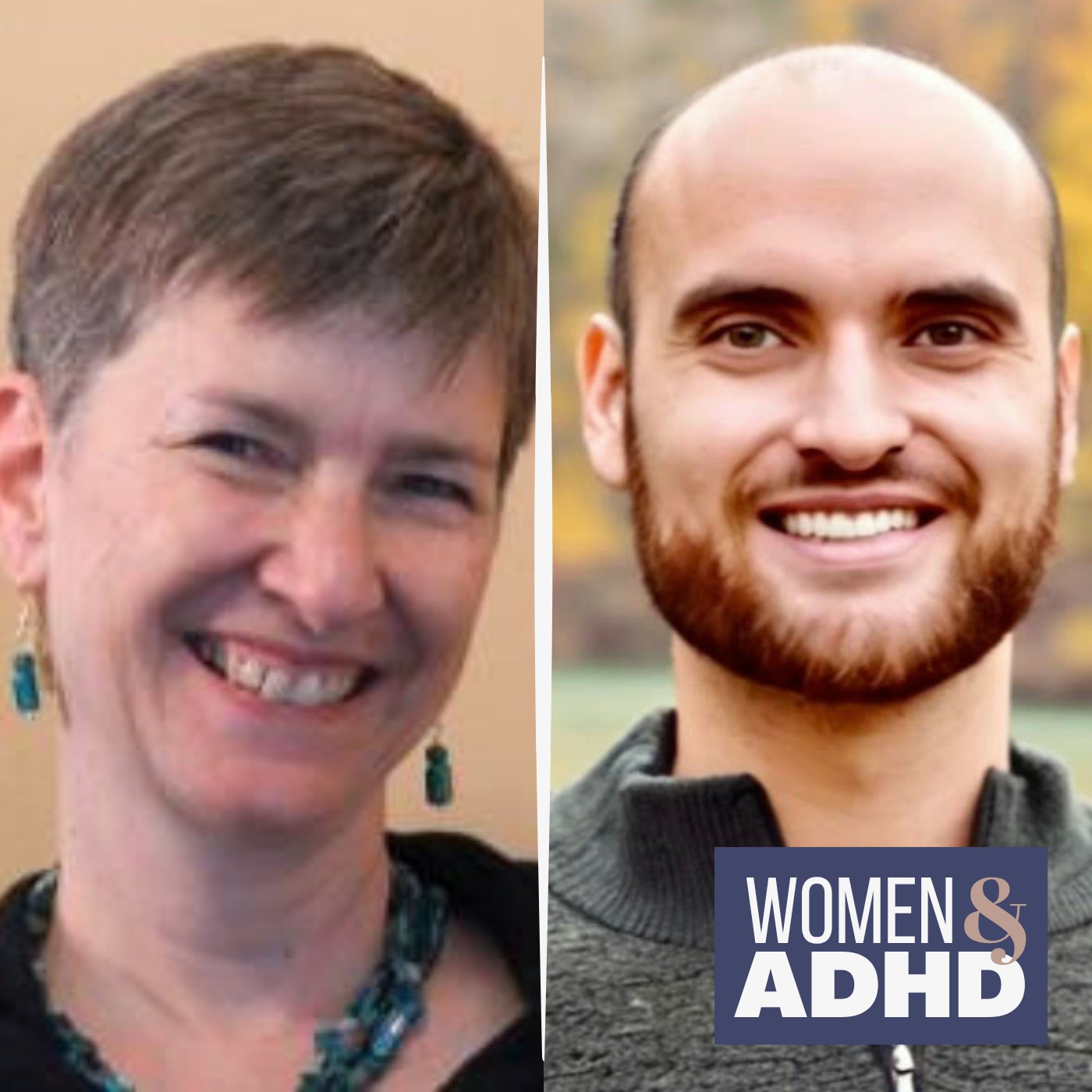
Elizabeth Ahmann & Micah Saviet: How clinicians and coaches can help ADHD clients flourish
About This Episode
Episode 216 with Elizabeth Ahmann & Micah Saviet
Elizabeth Ahmann, ScD, RN, PCC, NBC-HWC is an ADHD and health and wellness coach, professor, researcher, and Micah Saviet, LCSW-C, NBC-HWC is a trauma-informed, neurodiversity-affirming clinician.
Their book, Flourishing with Adult ADHD, offers a research-informed, strengths-based, and trauma-informed framework for supporting adults with ADHD beyond symptom management. Grounded in neuroscience, psychology, public health, and wellness research, the book challenges deficit-based models and provides practical, affirming guidance for professionals supporting adults with ADHD.
Rather than focusing solely on coping strategies, this book centers flourishing — supporting adults with ADHD in developing self-trust, self-compassion, emotional regulation, clarity, and lives aligned with their values.
We talk about how coaching and therapy can work together, why Liz and Micah originally wrote the book for clinicians but found it resonated with adults with ADHD, and their hopes for the future of ADHD care, from better training to broader acceptance.
Key topics:
- Micah shares that he was diagnosed with ADHD at age 11 and describes how his hyperactivity was noticeable early on.
- Liz explains that she has not been diagnosed with ADHD, but family experience, especially with her husband, led her into ADHD coaching.
- The conversation reframes ADHD as a difference in attention and regulation, not simply a deficit.
- Micah and Liz explain that their book grew out of research on ADHD coaching and focus groups with experienced coaches.
- Shame comes up repeatedly as one of the biggest barriers to growth, self-understanding, and flourishing for adults with ADHD.
- They emphasize that many therapists and coaches still lack meaningful training in ADHD, especially adult ADHD, masking, and neurodivergence.
- The episode draws a clear distinction between a deficit-based medical model and a client-centered, strengths-based approach.
- They discuss how coaching and therapy can complement each other rather than compete, especially when grief, trauma, and executive functioning challenges overlap.
- Validation, self-compassion, psychoeducation, and mindfulness are presented as foundational tools for helping clients move away from self-criticism.
- The conversation also addresses diagnosis, stigma, trauma, education trauma, and the social conditions that can make ADHD feel more impairing than it is in isolation.
Website: https://www.pathways-ahead.com/ ; https://www.adulttraumaandadhdsolutions.com
Instagram: @adulttrauma_adhdsolutions
LinkedIn: https://www.linkedin.com/in/micah-saviet/ ; https://www.linkedin.com/in/lizahmann/
Links & Resources:
- Flourishing with Adult ADHD: The Evidence-Based Guide to Well-Being for Therapists, Coaches & Clients
- Kristin Neff’s self-compassion resources
- - - - -
Episode edited by E Podcast Productions
- - - - -
Women & ADHD coaching: www.womenandadhd.com/coaching
- - - - -
Work 1-on-1 with Katy: www.womenandadhd.com/katy
- - - - -
Order the “Hey, it’s ADHD!” course: www.womenandadhd.com/adhdcourse
- - - - -
Did you love this episode? Click here to pledge a one-time donation to the podcast!
- - - - -
If you are a woman who was diagnosed with ADHD and you’d like to apply to be a guest on this podcast, visit womenandadhd.com/podcastguest.
Instagram: @womenandadhdpodcast
Tiktok: @womenandadhdpodcast
Twitter: @womenandadhd
Facebook: @womenandadhd
Advertising Inquiries: https://redcircle.com/brands
Privacy & Opt-Out: https://redcircle.com/privacy
[SPEAKER_02]: The diagnosis can be like changing, because it does open the door to a whole new way of looking at things. [SPEAKER_02]: But it doesn't solve the issue of fitting your square peg into all the round holes. [SPEAKER_02]: Where are the square holes? [SPEAKER_02]: This is my question.
[SPEAKER_00]: Hello and welcome to the women and ADHD podcast. [SPEAKER_00]: I'm your host, Katie Weber. [SPEAKER_00]: I was diagnosed with ADHD at the age of 45, and it completely turned my world upside down. [SPEAKER_00]: I've been looking back at so much of my life, school, jobs, my relationships, all of it with this new lens, and it has been nothing short of overwhelming. [SPEAKER_00]: I quickly discovered I was not the only woman to have this experience and now I interview other women who like me discovered in adulthood they have ADHD and are finally feeling like they understand who they are and how to best lean into their strengths both professionally and personally.
[SPEAKER_00]: Well, come back to another episode of the women and ADHD podcast. [SPEAKER_00]: So now, as some of you may know, especially if you've been listening to this podcast for a while, when I was diagnosed with ADHD nearly six years ago at this point. [SPEAKER_00]: At the time, I was a certified holistic health coach. [SPEAKER_00]: Now, I specialized originally in working with clients who were struggling with binge eating disorder and wanting to break free from yo-yo dieting and diet culture in general in order to have a more peaceful relationship with food and their bodies.
[SPEAKER_00]: Now, as you can imagine, when I realized I had ADHD, I started looking at everything through this neurodivergent lens, and I realized many of my clients who were struggling with binge eating disorder also had ADHD. [SPEAKER_00]: Now, my own coaching techniques began to shift toward working specifically with challenges related to ADHD, like executive functioning and reframing shame and regulating our nervous systems and learning to unmask and operate within our capacity. [SPEAKER_00]: I wasn't formally trained as an ADHD coach and I've always been very honest about that, but as a certified coach who was very proficient in motivational interviewing and offering accountability and goal setting strategies with my clients, I also knew that they were coming to me wanting to get stuff done, so they were goal oriented, but they were also dealing with depression and anxiety and shame.
[SPEAKER_00]: In our sessions, it's really difficult to focus only on goals like decluttering or completing a project without also addressing some of the crippling negative self-talk after a lifetime of being called lazy. [SPEAKER_00]: It becomes really messy and complicated when you're working on setting limits on your workload or delegating tasks at work. [SPEAKER_00]: If you're not addressing some of the origins of your own perfectionism and people pleasing and high-pervigilance. [SPEAKER_00]: Now, over the years, I have worked with hundreds of clients, either in groups or individually, and I always grappled with what was ethically sound as a coach.
[SPEAKER_00]: I couldn't act as their therapist, but many of my clients were not happy with the therapy that they had received in the past, or they would ask me, can you recommend a therapist who not only understands the unique challenges of being an adult with ADHD, but also what it's like to be diagnosed in a
[SPEAKER_00]: So I made the choice four years ago to go back to grad school and become a clinical mental health counselor so that I could work with ADHD clients not only as someone who deeply understood the experience of adult diagnosis but also had effective strategies and structures in place in my own life that I knew work for the neurodivergent brain. [SPEAKER_00]: Now, throughout my clinical training, I was deeply frustrated by the curriculum and the deficit based understanding of ADHD, as well as the general lack of emphasis on a string-spaced approach to change.
[SPEAKER_00]: I found there to be almost no mention in the curriculum of executive functioning or the accompanying frustration and shame that come along with executive functioning challenges, which are often central to living life with ADHD. [SPEAKER_00]: Even with the growth in understanding around ADHD and the increase in diagnoses, I still think women are getting diagnosed with depression or anxiety without adequate understanding of the underlying causes. [SPEAKER_00]: And while the clinical understanding of neurodivergence is certainly expanded in the field over the years, there is still a long way to go when it comes to training future therapists.
[SPEAKER_00]: Throughout my training, I was met with a lot of disdain for coaching. [SPEAKER_00]: I mean, I get it. [SPEAKER_00]: Mostly it's an unregulated field and frankly, anyone can just call themselves a coach. [SPEAKER_00]: So, you know, be careful out there. [SPEAKER_00]: There's a lot of influencers out there who think lived experiences enough for them to suddenly call themselves a coach. [SPEAKER_00]: But there was always a sense for my professors who knew I had a decade of coaching experience under my belt that therapy and coaching needed to be kept separate.
[SPEAKER_00]: That therapy is for healing deep wounds and coaching is goal-oriented and forward-thinking. [SPEAKER_00]: And I just don't think it's that simple. [SPEAKER_00]: I don't think it's that easy to separate the two, especially when you know that many of your deep wounds are tied to your difficulties with executive functioning and the execution of tasks. [SPEAKER_00]: I believe that clinically both approaches can and should work together, especially when working with neurodivergent clients.
[SPEAKER_00]: Okay, so why have I gone on this whole tirade of my soapbox? [SPEAKER_00]: Because all of this is to say, I was beyond excited. [SPEAKER_00]: When earlier this year, I came across the book entitled Flourishing with Adult ADHD, the evidence-based guide to client-well-being for therapists and coaches. [SPEAKER_00]: It was written by Elizabeth Aumann, an ADHD coach, and Micah Savvyet, a therapist. [SPEAKER_00]: I felt like, oh my goodness, somebody is speaking my language. [SPEAKER_00]: So here we are at episode 216 in which I interview Elizabeth Aumann and Micah Savvyet.
[SPEAKER_00]: Liz is an ADHD and health and wellness coach, professor, a researcher, and Micah is a trauma-informed neurodiversity affirming clinician. [SPEAKER_00]: So their book, flourishing with adult ADHD, offers a research informed, strength, space, and trauma-informed framework for supporting adults with ADHD beyond just symptom management. [SPEAKER_00]: It's grounded in neuroscience, psychology, public health, and wellness research. [SPEAKER_00]: The book challenges the deficit-based models and provides practical affirming guidance for professional supporting adults with ADHD.
[SPEAKER_00]: flourishing, supporting adults with ADHD and developing self-trust, self-compassion, emotional regulation, clarity, and lives aligned with their values. [SPEAKER_00]: During this interview, we talk about how coaching and therapy can work together. [SPEAKER_00]: Why Liz and Micah originally wrote the book for clinicians, but have found it has resonated with adults with ADHD and I fully agree. [SPEAKER_00]: And we talk about their hopes for the future of ADHD care, from better training to broader acceptance.
[SPEAKER_00]: I certainly enjoyed this interview with Liz and Micah, and I hope you do too. [SPEAKER_00]: All right. [SPEAKER_00]: Well, Micah and Liz, thank you so much for joining me today on the Women in ADHD podcast. [SPEAKER_00]: Very excited to have you here. [SPEAKER_02]: Our pleasure. [SPEAKER_00]: Micah, you're actually the second cis male to be on this podcast. [SPEAKER_00]: You got in with friends and family discount. [SPEAKER_00]: But you know, I do usually start out my interviews asking about ADHD diagnoses because so many of my guests received an adult diagnosis.
[SPEAKER_00]: So I am curious from for both of you. [SPEAKER_00]: I know Liz you have relatives who have ADHD work with ADHD population, but I guess Michael will start with you when how old were you when you were diagnosed? [SPEAKER_00]: What was kind of happening? [SPEAKER_00]: What were some of those signs that led to the diagnosis? [SPEAKER_01]: Yeah, great, great question. [SPEAKER_01]: So I was actually lucky enough to be diagnosed when I was younger. [SPEAKER_01]: So I was diagnosed when I was 11.
[SPEAKER_01]: And I think my hyperactivity was quite apparent when I was younger. [SPEAKER_01]: So that was one thing that led my mom to kind of give me diagnosed and explore that. [SPEAKER_01]: But as a coach and a therapist, most of my clients
[SPEAKER_01]: late diagnosed, even company, even just suspecting ADHD might be present and we're working through the process of it. [SPEAKER_01]: They want an official diagnosis to explore that or the kind of self-diagnosis is something that resonates more with them. [SPEAKER_01]: So this is most of my clients I work with. [SPEAKER_00]: Yeah. [SPEAKER_00]: Well, I find even when I speak to guests who were diagnosed in childhood, the view of ADHD, the understanding of ADHD has evolved so much over the last few decades that like it was almost like a very different diagnosis than it is now, especially you know, and I know we'll talk about this too in the book about the deficit-based diagnoses versus what we're looking at now.
[SPEAKER_00]: your understanding of ADHD is so different now than that I'm sure it was when you were diagnosed. [SPEAKER_01]: Much more nuanced, as I learned so much from my clients and working with them and being in the field, like it's much more nuanced and much more understanding of how it's actually a plethora of attention, not a deficit of attention, and where I can target
[SPEAKER_01]: for me aged is so much about working with regulation. [SPEAKER_02]: I think that's a newer understanding. [SPEAKER_01]: You know, this idea of nervous system regulation, regulation of attention and that being how I can work best with myself. [SPEAKER_02]: Frank, yeah, too, that I've been a coach for many years. [SPEAKER_02]: No, I won't say how many. [SPEAKER_02]: But, and I think many who trained when I did as ADC coaches, we've also expanded how we work with clients from managing
[SPEAKER_02]: more to who am I and how do I meet my way in the world some of which is managing executive function deficits but you know the focus is broader more about the person rather than the problem. [SPEAKER_00]: Yeah, right? [SPEAKER_00]: Absolutely. [SPEAKER_00]: I know I love that thread in the book. [SPEAKER_00]: Just this, the redefining what is normal and this notion of like the emphasis is less on behaving and fitting in and much more on strengths and I guess I'll just get into the book first because it's just so phenomenal and I was so I'm so glad it exists and I'm so excited to have it on my
[SPEAKER_00]: in a little bit, but Liz, I was curious, you know, you've been a ADHD coach for a long time, but you do not have ADHD. [SPEAKER_02]: Well, I've never been diagnosed anywhere. [SPEAKER_02]: Some people say, maybe I have some aspects of it, but my kids have it. [SPEAKER_02]: My husband, I don't know why it didn't be so long to figure out, but totally he has it. [SPEAKER_02]: And you know, we just really put a finger on that
[SPEAKER_02]: he was managing life chaoticly for a long time. [SPEAKER_02]: So I have a very intimate familiarity with it outside of my coaching. [SPEAKER_02]: So in fact, that family experience is what really led me into PIDHD coaching. [SPEAKER_00]: Yeah. [SPEAKER_00]: Yeah. [SPEAKER_00]: You know, it's one of those questions I ask with genuine curiosity, what I've meet somebody who works with neurodivergent clients and does not have ADHD is always that feeling like, how do you know you don't have it, right?
[SPEAKER_00]: I always feel like that's a question because there are so many of those question marks around, you know, what is neurodivergent? [SPEAKER_00]: I guess it's sort of like, how much of this is just neurodivergence, either in an environment
[SPEAKER_00]: Um, not hospitable to neurodivergence, right? [SPEAKER_02]: Um, you know, that's interesting because my sister is a little bit younger than I am, but she was always like herself growing up. [SPEAKER_02]: But now she's saying she probably thinks she's autistic and I think, oh, that does make sense. [SPEAKER_02]: Um, but, you know, in my family, we just were who we were. [SPEAKER_02]: It was not a family that tried to make you be a certain way. [SPEAKER_02]: And so, do I have some neurodivergence?
[SPEAKER_02]: Yes, maybe Michael would say I totally have hyperfocus.
[SPEAKER_01]: That's how we wrote this book. [SPEAKER_01]: No way we could have gotten through this book without hyper focus. [SPEAKER_00]: Oh, it is so thorough. [SPEAKER_00]: I always, you know, I found it. [SPEAKER_00]: I feel like there's a lot more than hyperfocus at work with this book because I feel like there is a level of diligence that goes beyond hyperfocus with this book. [SPEAKER_00]: Where you really had to, I'm sure had moments where you really had to buckle down and say, OK, we're going to cover so many elements and approaches to working with neurodivergent clients that I feel like, [SPEAKER_00]: Hi, for focus goes so far, but there had to have been some level of real raker in getting this book published and out there.
[SPEAKER_02]: Yeah, we had one tree had the idea we really had a passion for it. [SPEAKER_02]: And in fact, we had an initial proposal and then added chapters as we really dug in and thought more about it. [SPEAKER_02]: Like, oh, you know, [SPEAKER_02]: this piece really needs to be here. [SPEAKER_02]: So it was really a work of passion for us. [SPEAKER_00]: Yeah. [SPEAKER_00]: OK, so tell me about how you decided to really dig in with this book or what were you feeling was lacking in the clinical community that led you to say, like we really need to put some of this down for clinicians, especially.
[SPEAKER_01]: Yeah, yeah, and I'll let Liz kind of dive into that a little bit, but I just want to first say like, you know, this as you mentioned this book was designed with like coaches therapist doctors clinicians nurses in mind, but we've also been getting a lot of feedback from adults themselves with ADHD who are really appreciating the book. [SPEAKER_01]: And so what we think we've been hitting on somebody of meaning, which is what we hope for, even though that wasn't already in our target audience.
[SPEAKER_02]: Yeah, that's been very fulfilling to get that feedback. [SPEAKER_02]: But let me go to your question about the origins of the book. [SPEAKER_02]: We have been doing research on ADHD coaching and health and wellness coaching for about 10 years now. [SPEAKER_02]: You can see our research on our website, Springer Institute. [SPEAKER_02]: But as part of our research agenda, we were working on a product to develop a set of guidelines for a 12 session coaching intervention for engagement that we wanted to use in a larger research study of ADHD coaching for adults.
[SPEAKER_02]: And we were working on these guidelines by having these focus groups with very experienced ADHD coaches, what is ADHD coaching, like what happens in ADHD coaching. [SPEAKER_02]: I don't like you. [SPEAKER_02]: You might want to talk about it. [SPEAKER_02]: Some issues came up that really motivated us to think about this book. [SPEAKER_01]: Yeah, one of the biggest issues that came up was shame, right? [SPEAKER_01]: And how to address this with clients, how to begin working through this.
[SPEAKER_01]: You know, listen, I started writing this with originally like from a shame perspective. [SPEAKER_01]: Like this is shame. [SPEAKER_01]: This is how we interviewed with shame. [SPEAKER_01]: And then we pulled back and we said like,
[SPEAKER_01]: we really want to start looking at what to do from more of a well-being perspective. [SPEAKER_02]: Well, why are we talking about shame? [SPEAKER_02]: Let's move on. [SPEAKER_02]: We don't do we want to be talking about here. [SPEAKER_01]: Yeah, yeah, right? [SPEAKER_01]: And we know that so many therapists, like I'm very familiar, just having no training of working with people with ADHD, let alone adults with ADHD. [SPEAKER_01]: We have such a limited understanding [SPEAKER_01]: in our basic training as therapists of what ADHD isn't how it even shows up.
[SPEAKER_01]: So many therapists with ADHD, this is a problem to be addressed. [SPEAKER_01]: And that's often an unhelpful paradigm. [SPEAKER_01]: So this book is really not a complete primer on ADHD for therapists, but we designed it to show therapists how
[SPEAKER_01]: And we wanted to show ways that we can help adults of ADHD move towards flourishing. [SPEAKER_02]: Yeah, and I'll add two coaches, including those specifically trained to work with individuals with ADHD. [SPEAKER_02]: We're trained in useful skill sets to support awareness, to support the change process. [SPEAKER_02]: ADHD coaches also train in executive functioning and understanding motivation in ADHD in the neurobiological differences, strategies, but we want us to take things step further for coaches as well and show how grounding coaching practice in theoretical frameworks can really enrich the ways you can work with clients and can really support, not simply
[SPEAKER_02]: where they want self-determined change and movement towards well-being and flourishing. [SPEAKER_02]: So those were the threads we were working with. [SPEAKER_00]: Yeah, well, from my own perspective, and I've shared this, my listeners will know this whole back story, but like I started out as a holistic health coach and I was working with clients with binge eating, and we were working on binge eating recovery and diet recovery, and then when I was diagnosed in 2020 with ADHD, I kind of wanted to go back and talk to all my old clients.
[SPEAKER_00]: to be like, guess what? [SPEAKER_00]: We all have ADHD because you know, there was so much of it through there. [SPEAKER_00]: But as I was sort of working more and more with ADHD clients and understanding and developing that language for ADHD, I had a lot of my clients talking about negative experiences in therapy, right? [SPEAKER_00]: And some of the stuff that you addressed, which was like, you know, I felt like I was done talking about my core wounds and I really wanted to figure out how to get stuff done.
[SPEAKER_00]: and it felt like there was a lot of frustration there in terms of being treated like they maybe didn't want to do things as opposed to developing, you know, like working within the frustrating, the frustration element of knowing what you want to do, wanting to do it and not being able to do it, right? [SPEAKER_00]: And I felt like coaching worked really was a really great modality, but I also found that a lot of my clients I was working with also wanted to talk. [SPEAKER_00]: about relational elements, about the shame, about where these messages were coming from.
[SPEAKER_00]: And as a coach, I kind of always felt like, is this unethical or retreading in therapeutic waters? [SPEAKER_00]: So in terms of due diligence, I went to now train as a mental health counselor and just graduated from the mental health clinical mental health counseling program. [SPEAKER_00]: Thank you, so I'm doing my limited permit in New York, but was really disappointed as a student in the curriculum still around neurodivergence or the lack of curriculum. [SPEAKER_00]: I mean, there was career coaching elements, you know, in study and career coaching, but really.
[SPEAKER_00]: Not only the lack of the lack of understanding around motivational, you know, the lack of teaching around motivational interviewing and stages of change, but also the sort of negative outlook on coaching in general and how coaching, you know, that that's a year bunch of snake oil salesmen and, you know, there's [SPEAKER_00]: the two cannot meet. [SPEAKER_00]: And I feel like coaching at therapy go really, really well together. [SPEAKER_00]: So I love, you know, that was I think what was most exciting when I saw the book, not only the nod to positive psychology with the word flourishing, but also this nuanced weaving of how, you know, coaching and therapy are not these two disparate modalities, but can actually co-exist in a really [SPEAKER_00]: Yeah, I guess I just really appreciate that point of view because I didn't see that at all in the mental health curriculum.
[SPEAKER_00]: I think that we still have a long way to go in terms of showing clinicians. [SPEAKER_00]: What it might look like to work with an ADHD client beyond just CPT. [SPEAKER_02]: Yeah, I think that's really important and maybe I'll comment on what some coaches feel. [SPEAKER_02]: that therapists think about coaching is that it's kind of the wild west and you're not to commonly use term. [SPEAKER_02]: And I think there is the wild west, but there's also really an emerging serious profession there.
[SPEAKER_02]: And right now, unlike various types of therapies, coaching is not like a licensed profession, but in fact, there are credentials that are very valid credentials, [SPEAKER_02]: the International Coaching Federation, the National Board for Health and Wellness Coaches, these are require training, mentoring, practical skills assessments, written examinations that are proctored, so the training is taken seriously and the development of the coaches is taken seriously. [SPEAKER_02]: So I think, you know, I just say that therapists, if you would like to try, you know, referring
[SPEAKER_02]: look for credentialed coach, because that's where the emerging profession is strong. [SPEAKER_02]: Anybody can call themselves a coach because it's not a licensed profession, but definitely there's strong credentialing available. [SPEAKER_02]: And I think that can be helpful to be aware of. [SPEAKER_00]: Yeah, absolutely.
[SPEAKER_00]: from a client's point of view, how do they know if somebody was diagnosed with ADHD, and basically went to their provider, they were diagnosed, they're given medication, which is usually the only thing that happens, right? [SPEAKER_00]: It's like, hey, here's your medication, good luck to you. [SPEAKER_00]: How does somebody as a client know, like, do I want therapy? [SPEAKER_00]: Do I want coaching? [SPEAKER_01]: Yeah, that's a great question right. [SPEAKER_01]: And first of all, I would just add the layer in the context that we know current clinical guidelines for treating and addressing ADHD date that what's called a multi-modal approach is evidence based standard.
[SPEAKER_01]: So even your EM guidelines for treating ADHD suggest that both coaching and therapy should be part of a comprehensive multi-mobile treatment. [SPEAKER_01]: So in the U.S. we're still waiting for the development of these clinical treatment guidelines for adults. [SPEAKER_01]: But we hope that maybe we'll incorporate some of this wisdom. [SPEAKER_02]: Yeah, yeah, I think. [SPEAKER_02]: Maybe the biggest challenges adults with ADHD face in finding effective support is not whether to choose a culture or therapist, but as you mentioned in your mental health training, the majority of therapists and coaches don't have training in working with adults or ADHD.
[SPEAKER_02]: They have a more limited focus, well, therapists and DSM-based understanding of ADHD and coaches
[SPEAKER_02]: out the overlay of understanding neurodivergence and how to work with it. [SPEAKER_02]: So really, we think that the gap and effective ADHD care really lies in a lack of comprehensive understanding among all providers of the neurobiology of ADHD, differences in motivation and rewards, executive functioning. [SPEAKER_02]: And really also what we think is super important is [SPEAKER_02]: a neuro affirming stance. [SPEAKER_02]: So understanding and being a affirming of neuro divergence.
[SPEAKER_02]: And our view is that the most important first step for anyone with ADHD, looking for support, it's a look for someone who really takes that neuro affirming ADHD literate stance in their work. [SPEAKER_02]: So that's, I guess, in the nutshell, I think is the most important. [SPEAKER_00]: Yeah, yeah, that's a really good point. [SPEAKER_00]: I think similar to, you know, that there's almost the flip side to the coaching Wild West. [SPEAKER_00]: There is this, you know, increasing tendency for therapists to just put yes.
[SPEAKER_00]: I also specialize in ADHD because I watched a YouTube video. [SPEAKER_00]: And that we could have more. [SPEAKER_00]: specific ADHD training to multimodality training for therapists as well, similar to something like EMDR, you know, a much more rigorous training. [SPEAKER_01]: And in that regard, you know, in my opinion, lived experience is not adequate to work with, you know, adults with ADHD effectively, lived experience of having ADHD oneself as a therapist or coach is wonderful, but, you know,
[SPEAKER_01]: because what works for us as someone if you might not work for others. [SPEAKER_01]: And also just I know in general, folks tend to find therapy a little bit more past focused or how do I get to where I am now, right? [SPEAKER_01]: We think of like that trauma work or narrative. [SPEAKER_01]: If you haven't done that type of work yet to like unpack your childhood and figure out what were the signs like you mentioned before, were the signs that were here that nobody picked up on or the supports that I needed, but I didn't get.
[SPEAKER_01]: When I was younger, processing brief that comes with that with adult diagnosis, there's often a lot of brief processing that needs to. [SPEAKER_01]: needs to happen, right, of reminiscing on what I needed, but didn't get to receive. [SPEAKER_01]: In general, as you mentioned, like coaching tends to be more present in future orientant, not that the past can't inform the future, but a lot of people with coaching find that it really helps address like where the rubber meets the road. [SPEAKER_01]: So it speaks like, [SPEAKER_01]: where are we now and how do we how do we get to where we're going not that there if this can't do that and cross referrals maybe necessary right like some people find starting with therapy and doing some of that work and then kind of graduating into that coaching work as a useful trajectory.
[SPEAKER_02]: I will would like to share we've done some qualitative research it we've had it out in a poster presentation but it's not
[SPEAKER_02]: Interestingly, these were with adults with ADHD who had received coaching. [SPEAKER_02]: Some really felt that coaching should be more widely available, insurance covered and so important. [SPEAKER_02]: So on, because they found that help with the rubber meets the road to really understand their ADHD and their executive functioning and figure out how to move forward and who they were was really useful. [SPEAKER_02]: And so there can be benefit both ways. [SPEAKER_00]: Right, especially in a group environment, I feel like group coaching and group therapy is probably one of the most effective modalities in terms of having a validating environment.
[SPEAKER_00]: You know, I feel like there's a lot of research to around the efficacy of group validation, especially with an adult diagnosis. [SPEAKER_00]: And it's a little bit more cost effective than than the one on one. [SPEAKER_02]: Yeah, and I would pop back to what you said before or we kind of talked about a little bit about that kind of shame and not fitting in peace is finding other people who are like you rather than living completely a masked life as an adult with ADHD can just be very liberating and groups are one way you can find that.
[SPEAKER_00]: Yeah, one of the things I've noticed over interviewing more than 200 women and also just working with women individually and groups is this core question that all of us seem to have [SPEAKER_00]: prior to diagnosis and even still after diagnosis often is that what's wrong with me right and you talk about it in the book this sense this course sense of brokenness that a lot of clients bring with them that there is something wrong with them and it needs to be fixed right and you know I really appreciate the way in which you address it in terms of like [SPEAKER_00]: breaking down kind of that, that I'm broken narrative, but also, you know, this subtle difference between, you know, a desire to help a client by fixing them, sort of the medical model of like, yes, we have diagnosed the problem, let's fix it as opposed to what really needs to happen in terms of like reframing and working on strengths and.
[SPEAKER_00]: What I love about the positive psychology element of, you know, of, um, I don't have the words right now. [SPEAKER_00]: The strengths, uh, what's, what's the right. [SPEAKER_00]: I'm looking for the strengths base characteristics. [SPEAKER_00]: Yes, characteristics. [SPEAKER_00]: Thank you. [SPEAKER_00]: But, you know, it's not a matter of just like coming in and fixing that there is like really looking at some of those core beliefs, I guess how can practitioners really lead their clients from away from that that I need to be fixed mindset that kind of comes along with the diagnosis in itself right and and we can get we'll get to the whole to diagnose or not to diagnose later, but [SPEAKER_00]: It feels kind of endemic to a diagnosis, right?
[SPEAKER_00]: I mean, the word disorder is in the name. [SPEAKER_00]: And so how do we work kind of with this idea that yes, you happen struggling? [SPEAKER_00]: And yes, there is difficulty, and there is a disordered element to how you are living your life. [SPEAKER_00]: And also there's nothing wrong with you. [SPEAKER_02]: Yeah, I think that is really an excellent question. [SPEAKER_02]: And is really sort of the pivot place right now in ADHD care.
[SPEAKER_02]: to supporting individuals with ADHD and figuring out how to live the lives they want. [SPEAKER_02]: And that's really the focus of our book. [SPEAKER_02]: How do you promote that movement towards well-being and flourishing rather than how do you treat this disorder? [SPEAKER_02]: How do you fix this problem? [SPEAKER_02]: I mean, I don't like it you absolutely. [SPEAKER_01]: And I guess I would just bring us back to that shame when we're thinking about this, right? [SPEAKER_01]: Like, the shame is one of the biggest barriers that listen I see [SPEAKER_01]: flourishing for adults with ADHD, because as you and your listeners know so well these internalized messages like lazy too much crazy, too sensitive, you know, that constant failing because that ends up kind of shaping a previous identity and worth a nervous system response from a
[SPEAKER_01]: And when someone's in that state, we can't access, it becomes much harder to access our creativity, flexibility, self-trust motivation, human-to-human-to-human connection and compassion. [SPEAKER_01]: All of those are essential ingredients for flourishing. [SPEAKER_01]: So flourishing also begins when people can move from self-criticism and masking toward self-understanding and after that education piece, [SPEAKER_01]: coaching and psychotherapies comes in, because once you understand how your brain works, you can move toward self-understanding nervous system regulation, compassion, and authentic environments that are supported to you.
[SPEAKER_02]: Yeah, I think that one chapter of our book is on psych education, which is part of that encouraging self-understanding as one place to begin to be able to move forward, [SPEAKER_02]: rather than, you know, things that itself judgment and, you know, just recognizing this is an nervous system issue, not a moral failing. [SPEAKER_00]: Right. [SPEAKER_00]: Yeah, you know, I just spent the last year as an intern working at a crisis clinic for adolescents. [SPEAKER_00]: And so it was kind of an outpatient, personal hospitalization, a lot of them were coming out of the hospital, either from self harm with and suicidality or were being, you know, this was sort of our last chance.
[SPEAKER_00]: to keep them out of the hospital, but not surprisingly, a lot of these adolescents were neurodivergent, you know, either diagnosed or not. [SPEAKER_00]: And so we worked with a DBT model. [SPEAKER_00]: And so I got very, very familiar with DBT and Marshall in a hand, and you know, think about everything now through this lens of validation and radical acceptance and skill building. [SPEAKER_00]: And I know you do talk about DBT a little bit in the book, but for me, I feel like validation is something that is so key to how we [SPEAKER_00]: treat and talk to clients and and thinking about invalidating environments that have led to a lot of that feeling of of being broken and being other and wondering what's wrong with me right like I think about the way in which a lot of parenting is the way in which we think of.
[SPEAKER_00]: Acceptance is to fit in, right? [SPEAKER_00]: How do I change who I am to fit in? [SPEAKER_00]: And as a parent, you want your children to fit in, right? [SPEAKER_00]: You want your children to be accepted. [SPEAKER_00]: And I think that kind of inadvertently leads to a lot of these invalidating environments. [SPEAKER_00]: And I really love that you talk about radical self-compassion and radical acceptance in the book as a like an antidote to this internalize negative self-image around the ways in which we have been invalidated [SPEAKER_00]: you know, take on that invalidation in our self too.
[SPEAKER_00]: So I'm curious what your view is around the idea of radical self acceptance and radical acceptance in terms of like working with a client and what does that look like first I'd like to point you to chapter one in our book, which is a client centered lens that that's the first step.
[SPEAKER_02]: begin from the very beginning to unconditionally regard that client as whole and human and worthwhile. [SPEAKER_02]: And that sets the container, the framework for moving forward together. [SPEAKER_02]: And that also builds agency, builds self-determination
[SPEAKER_02]: are the center of the work together when the clients questions or the center of the work together. [SPEAKER_02]: So really, if anybody can read anything else in our book, if therapists and coaches really operate out of chapter one, a client-centered perspective, we think that's the foundation for the rest of work on. [SPEAKER_01]: self-acceptance, self-compassion, and education, psycho-education is also a thing. [SPEAKER_01]: That other layer, you have to understand how your brain works, because that's the antidote to send.
[SPEAKER_01]: There's something morally inherent wrong with me. [SPEAKER_01]: There's actually a neurobiological difference here. [SPEAKER_01]: That's not my fault. [SPEAKER_02]: Yeah. [SPEAKER_02]: So that's another chapter. [SPEAKER_02]: Psycho-education is very important. [SPEAKER_02]: It's a very important foundation to operate from, because then you understand yourself in a different way. [SPEAKER_00]: Well, I think a lot of the time there's this sort of misguided impulse to give advice in a therapeutic relationship, especially what a client is frustrated, right?
[SPEAKER_00]: Like, I don't know what I need to do next. [SPEAKER_00]: I don't know what I want to do, and so often then the [SPEAKER_00]: You know, they get assignments, they get homework, they get advice to follow. [SPEAKER_00]: And I feel like that just increases the sense of frustration and failure when inevitably they don't do it because they're incapable of doing it right like it's not and it's not a lack of desire to do it. [SPEAKER_00]: And so I think yeah that highlighting the person centered approach that.
[SPEAKER_00]: is built into coaching, which is like you come up with your, you know, self-efficacy and self-advocacy is built into, right? [SPEAKER_00]: That motivational interviewing element, too. [SPEAKER_00]: And I think sometimes there is this pressure for practitioners to give advice, right, to give homework and to do list. [SPEAKER_00]: not that there's no place for homework. [SPEAKER_00]: I just know that I, as a client, almost never do it. [SPEAKER_00]: I feel like I've had medical ions to do.
[SPEAKER_02]: No, but also the homework that people give is often way too big for someone with ADHD. [SPEAKER_02]: Like maybe a homework is just, this week, one of you think about what you might want, and we can talk about it more next week. [SPEAKER_02]: I had a great, I don't remember who it was, but some training I
[SPEAKER_02]: One of the things I was told is that sometimes you have to sit in them up with the client until they can find their way through it, and it was not as a coach of your job to try to transport them to the other side, but to be present, and know that that mock is part of the deal, and trust that they will find a way, but it's not what you say, because you don't really know.
[SPEAKER_01]: Yeah, it's some point in issue and I just wanted to go back to it because you weren't discussing self compassion and Liz is talking about some of the elements involved in that, but in our book, we really promote the work of Dr. Kristen mouth, who has done a lot of research and work on self compassion, right, like we're not reinventing the wheel in our book where we're drawing from evidence and theoretical frameworks that have already been established and are well known and many of her actual sizes of self compassion, [SPEAKER_01]: that you can draw from, you know, our free on the web for any of your listeners.
[SPEAKER_01]: The work is not specific to ADHD, but it's highly relevant to you really any human challenge or suffering that people navigate and that that's just part of the human. [SPEAKER_02]: Yeah, and I think to go back to something you said earlier about groups, one aspect of self compassion is to recognize that other
[SPEAKER_02]: So there is automatically in a practice of self-compassion, that's one of the pieces common humanity. [SPEAKER_02]: And that is also addressing that feeling of isolation. [SPEAKER_02]: And it's just me and I can't handle this and blah, blah, blah. [SPEAKER_02]: Part of self-compassion is just recognizing that suffering is part of the human. [SPEAKER_02]: And that just takes some pressure off. [SPEAKER_00]: Well, and I think also in a group environment too, it's not only just seeing other people who are suffering, but kind of similar to this notion of like, how would you talk to a friend?
[SPEAKER_00]: Like, you're seeing other people who are phenomenal and creative and intelligent and are also struggling like you are, right? [SPEAKER_00]: And so I think the ability to see that dialectic in somebody else makes it easier for us to think, oh, maybe I can also be all of these things at once and I don't have to only define myself by the negative traits, all of the DMN. [SPEAKER_01]: It's interesting, you know, I imagine some of your listeners may were like this, I just had a client yesterday, you said I can do anything anyone else needs from me and I help other people I have like no initiation barriers to helping other people if they reach out or they say they need help, but I can't even get myself to do my laundry, what's wrong with me.
[SPEAKER_00]: Right? [SPEAKER_00]: The what's wrong with me part. [SPEAKER_00]: Oh, I know. [SPEAKER_00]: Well, and not only that, but I feel like there's a really great business idea somewhere in there where you do each other's chores for you because I'm like, I don't want to I don't want to clean my garage, but I will happily go to your house and clean your garage. [SPEAKER_00]: I feel like there's got to be some chores swapping business out there for people. [SPEAKER_02]: Yeah, I want that idea.
[SPEAKER_02]: I mean, there are online accountability groups where you sign in and you say this is what I'm going to do for the next hour. [SPEAKER_02]: So there's a little bit of that kind of support, but it's not as cool as chores flopping. [SPEAKER_02]: I can I can really get into that idea. [SPEAKER_00]: I know, right? [SPEAKER_00]: But I think it sort of also gets to that idea. [SPEAKER_00]: Like, there are so many tools that are out there and so many structures that are really, really helpful.
[SPEAKER_00]: But if we're not working from a, from a shame-free element of like, this is why I do this, or this is why I'm a neurologically have a tendency to do X or Y, you know, it's that explanation of who I am, that then, and the psycho education part that leads us to be able to help ourselves from a shame-free. [SPEAKER_00]: point of view. [SPEAKER_02]: It opens you up to being able to really lean into growth mindset and to see that things don't have to be the way they are, but that I can make changes effectively.
[SPEAKER_02]: Self-acceptance really also underlies self-determination. [SPEAKER_01]: Which is what our book really promotes is this idea of self-determination, [SPEAKER_01]: You know, coaches, therapists, doctors with more encouraging people, not to take that expert approach and say, do this homework, do this thing, do that thing, we're going to help this. [SPEAKER_01]: It's really how do we harness, how do we build that capacity for adults with ADHD and women with ADHD to feel more self-determined in their actions?
[SPEAKER_02]: I understand who you are, where you want to go and then, how do you get there? [SPEAKER_01]: Yeah.
[SPEAKER_00]: Yeah, I feel like I spent a lot of time reflecting back to my own clients how amazing they are and like what I'm seeing because as, you know, one of the things with dopamine is we pay attention to the negative right, I love a quote, what am I professor said from the, from Camus, the myth of Cisophias where it's like one must imagine Cisophias happy or satisfied and and I feel like that is sort of the essence he's like the Cisophias is like the ADHD mascot because of we. [SPEAKER_00]: spend so much time rolling the boulder up the hill and pay no attention to the top of the hill and once we are at the top of the hill we're looking for the next hill right so so a lot of the time and you called it you have a term for it too in the book which was like uh I should have written it down now I can't remember but it's basically this like uh the way in which we only focus on the negative right so there's this negativity bias that is on steroids for somebody with ADHD and how you know we have to be very intentional about the way in [SPEAKER_00]: view the positives in our life and remind ourselves about the positives in our life.
[SPEAKER_00]: I think a practitioner's job, right? [SPEAKER_02]: Yeah, myfulness is key, really cultivating awareness of how are you thinking? [SPEAKER_02]: Is you're thinking negative is a positive cultivating the ability to be self-appreciate over time. [SPEAKER_00]: Yeah, right and and also like I often find like I have to remind myself like oh I'm actually a very smart person and I'm very capable person so if I'm not doing this there's probably a good reason why I'm not doing this you know and and that kind of reminder of like I'm not a terrible person like maybe I just did a lot yesterday and today's a couch day so why would I ruin a perfectly good couch day by feeling that about it you know but it's like having to be really intentional about seeing the positive [SPEAKER_01]: We have a whole chapter of mindfulness, we have all chapter of self-convesting, but even what you're saying there, it's like, it's like that reminder, but also like, you know, we have a whole chapter that talks about this neuro-affirming stance, which is like part of that is substituting a firming terminology for more stigmatized language or more language than we have embedded and internalized ourselves.
[SPEAKER_01]: So that's like switching lazy to, oh, maybe I'm not lazy, maybe I just have an interest-based nervous system. [SPEAKER_01]: Or maybe I'm not like, you know, just, you know, did see it in an attentive, maybe I have selected focus selected focus or fluid attention, right? [SPEAKER_01]: So it's helping clients to work to start to do that themselves, they may need some handholding, but eventually that can be something that's internal. [SPEAKER_02]: Yeah, and interrogating your own expectations kind of like you said, [SPEAKER_02]: why I'm expecting I need to work when I'm tired or why do I have to put on my clothes and the dresser went, it's just quicker for me to operate on a laundry basket who cares.
[SPEAKER_02]: You know, just looking at the expectations and then how you want to make choices. [SPEAKER_02]: So being finding a way to be at choice more often than the way. [SPEAKER_00]: Yeah, absolutely. [SPEAKER_00]: Yeah, you know, and I think an adult diagnosis, especially, and maybe one at any age, really helps with that reframing model, right, which is that there's nothing wrong with me that this, you know, one of the reasons why so many people who are diagnosed with ADHD or even autism and ADHD, like in adulthood, there's we don't pathologize ever.
[SPEAKER_00]: it's a very wonderful experience. [SPEAKER_00]: It's an opportunity for growth and an opportunity to reframe. [SPEAKER_00]: I know so many of us, you know, you know, always use to joke, like if you tell somebody that you're diagnosed with ADHD and they have ADHD, they celebrate you. [SPEAKER_01]: Oh, congratulations! [SPEAKER_01]: That's so great! [SPEAKER_00]: I'm so glad where everybody else in your life is like, I'm sorry about your disorder. [SPEAKER_00]: at right but it's like it's something to be celebrated and yet at the same time I think what are the things now that you know I want to get your opinion on is that when we place the emphasis on the individual diagnosis like I don't want to discount that is a wonderful experience to be diagnosed and say oh now I have the answer to essentially why I'm struggling but I think we also then [SPEAKER_00]: place the onus on the individual which is like okay you have now been diagnosed with this disorder and we in putting the onus on the individual in creating this kind of you know buying into this medical model we are saying we I think we're discount a lot of these systemic stressors that are leading to even the diagnosis of ADHD right like a lot of the behavioral struggles
[SPEAKER_00]: the benefit or, or I guess, detriment of the diagnosis. [SPEAKER_02]: I think it's really a super question and very timely because people are really moving. [SPEAKER_02]: That's a moving thing from deficit to neurofirming. [SPEAKER_02]: That's really changing now. [SPEAKER_02]: And the diagnosis can be like changing because it does open the door to a whole new way of looking at things. [SPEAKER_02]: But it doesn't solve the issue of [SPEAKER_02]: fitting your square peg into all the round holes.
[SPEAKER_02]: Where are the square holes as my question? [SPEAKER_02]: And I do think there's so many types of difference that we need more room for in society. [SPEAKER_02]: And neurodivergence is one of them. [SPEAKER_02]: Accommodations are one thing. [SPEAKER_02]: But just looking at what are the gifts of the person and how does that fit here, whether it's in a marriage, a family, a workplace, [SPEAKER_02]: and so forth. [SPEAKER_02]: I think there is a lot more room for growth in that area.
[SPEAKER_01]: I don't know what yeah, you know, it's just a bill on that. [SPEAKER_01]: I mean, it's such an important question right. [SPEAKER_01]: We know this social stigma. [SPEAKER_01]: We know that societies, you know, there's neurochipical society and, you know, we aren't neurodiverse and we are all the minority, right? [SPEAKER_01]: So if you live for decades of your life thinking there's something wrong with you, and then we talk about this more family than you have all this stigma. [SPEAKER_01]: and shame, but also we have to think more broadly, we have to think about, you know, complex or compounded trauma because of that.
[SPEAKER_01]: Was it talking with a colleague the other day about something called education trauma? [SPEAKER_01]: We just literally going through a neuro-typical school system and being traumatized because your don't learn that way, right? [SPEAKER_01]: We have to talk about adverse childhood experiences. [SPEAKER_01]: social marginalization. [SPEAKER_01]: We have to talk about, you know, as you're listening, there's no late diagnosis, we have to talk about sociocultural contexts, ADHD and minority groups and now there's even more stigma there, right?
[SPEAKER_01]: So this is a humiliation of structures over time and these things start to layer and compound, right? [SPEAKER_01]: You not only [SPEAKER_01]: are more likely to have a HDB more impairing, but you're also struggles with identity issues, depression and anxiety. [SPEAKER_02]: That's the overcompensating trauma. [SPEAKER_01]: You're going to lead to neurodiverdin' burnout, which can be crippling. [SPEAKER_01]: So in my clinical therapy fact, because most of the clients that I see have that really complex childhood trauma, which complicates neurodiverdin' to ADHD, and really actually increases the severity of symptoms, [SPEAKER_01]: from a dysregulation point of view, right?
[SPEAKER_01]: When you have trauma, trauma's dysregulation, ADHD's dysregulation. [SPEAKER_01]: Many of my clients know what you mean? [SPEAKER_01]: They say, well, I have ADHD, I have trauma where to be started. [SPEAKER_01]: And like, well, let's start with trauma, because that's a variable that we can treat more effectively and then we can figure out what's left. [SPEAKER_00]: Yeah, I find that the same way with focusing on executive functioning deficits, right, which is like, I don't know if we're ever going to decide that the EF deficits are because of complex PTSD of living a life undiagnosed or, you know, I would add to your list that trauma of being in the gifted program.
[SPEAKER_00]: The, I feel like the gifted program to ADHD diagnosis pipeline is a thing, but also just that feeling of like, you're intelligent and you're not living up to your potential is like a unique type of heavy right the not living up to your potential trauma, but I think you know focusing on the executive functioning deficits like sometimes I think like is ADHD even a thing or is it essentially just PTSD wrapped up in this other. [SPEAKER_00]: diagnosis and what we're really looking at is is the complex trauma of living being a neurodivergent human and nervous system and brain in a world that is not fit for, you know, fit for how you operate.
[SPEAKER_00]: That's a little out there. [SPEAKER_02]: What if you are a hyperactive boy and third grade and your teacher found active ways for you to learn rather than being upset with you for not sitting
[SPEAKER_02]: the whole different life that would follow them. [SPEAKER_00]: Oh, exactly, right? [SPEAKER_00]: Or if you were a child, a person of color in that classroom, you were more likely to be sent to the Principal's Office instead of being sent to an ADHD diagnosis, right? [SPEAKER_00]: So again, it's like bringing in all of the multicultural ways in which children are treated to, which I also love that you get into in your book, too, because I think that's such an important element, too, is how our environment treats us, you know?
[SPEAKER_00]: And that layer of that trauma, as well. [SPEAKER_00]: So I'm curious, like, how, what do you see for the future of diagnoses or the DSM? [SPEAKER_00]: What would you like to see in terms of, you know, you talk about vast and you talk about a kinetic, some of the other names, the kinetic, what is a kinetic cognitive kinetic energy style, I think. [SPEAKER_00]: Yeah, right. [SPEAKER_00]: Like, what would you, if you could rename ADHD, what would you rename it to, and I'm also curious, like, what.
[SPEAKER_00]: What do you see as the future of of how ADHD shows up in the DSM are or in clinical practice? [SPEAKER_01]: Yeah, that's a great question. [SPEAKER_01]: I mean, you're not the first to ask that question right, like as a field, right? [SPEAKER_01]: Because it like you mentioned psychiatrists know how well proposes that that fast, variable attention stimulus trait. [SPEAKER_01]: right because we know age, she's not a lack of attention. [SPEAKER_01]: It's that older abundance, right? [SPEAKER_01]: And it's just such a stigmatizing term.
[SPEAKER_01]: But yet at the same time, for many people, this is a deficit. [SPEAKER_01]: This is a disability in our neuro-typical society, right? [SPEAKER_01]: So I mean, just personally, I would love to see that DSM broaden its perspective, particularly for adult ADHD, [SPEAKER_01]: inserting aspects regarding emotional regulation, that's missing because that's significantly missing. [SPEAKER_01]: I get some more specificity around how does this look differently for Delta ADHD versus children because much of the criteria is standardized in the opposite direction for women with
[SPEAKER_02]: I don't think much about the DSM. [SPEAKER_02]: I just have a much more person-centered approach and particularly as a parent who raised children with neurodivergence. [SPEAKER_02]: I have a dream for a time when there's just broader acceptance of individuals with widely varying gifts, acceptance for neurodiversity, like just like we accept blue eyes, brown eyes, green eyes, or different hair colors. [SPEAKER_02]: I mean, we need that kind of acceptance. [SPEAKER_02]: for other differences, as well, skin color, cultural backgrounds.
[SPEAKER_02]: But neurodivergence is one of those areas in which I think, well, ADHD really need a name at all, if we grew as a society, and maybe some future points, I can really dream about this point. [SPEAKER_02]: The traits can simply be appreciated as part of the beautiful range of human diversity. [SPEAKER_02]: So as a parent, seeing society and raising [SPEAKER_02]: neurodivergent kids. [SPEAKER_02]: That was kind of always my hope. [SPEAKER_02]: Well, we ever get there, but that's my dream.
[SPEAKER_00]: Right. [SPEAKER_00]: I think it is a wonderful view for the future in terms of not having to diagnose this, but I also understand like you're saying, Mike, I like, you know, I've joke about this in the past, like nobody comes to their ADHD diagnosis because everything's going great and they're like, I need a name for this superpower. [SPEAKER_00]: like, you know, they're generally struggling in society, but I think it's also that term deficit. [SPEAKER_00]: It's like it's not a personal deficit.
[SPEAKER_00]: I am just struggling because I have barriers that I have not been able to, you know, have a language for or been able to identify. [SPEAKER_00]: So, yeah, like I did, you know, the diagnosis, I think is a really important element of psychoeducation. [SPEAKER_02]: I think you need to step yourself differently, right? [SPEAKER_00]: Right. [SPEAKER_00]: but at the same time, like how can we stop treating this like, I don't feel like it falls under the same category as some other mood disorders, right?
[SPEAKER_00]: So it's sort of like, how do we, it's not a disease. [SPEAKER_02]: I have a question, and I have, like, why is it called a mental health disorder? [SPEAKER_01]: It's not, it's a neurobiological difference and that's one of the challenges. [SPEAKER_01]: So when we see autism at ADHD and the DSM like that, [SPEAKER_01]: They are not food disorders. [SPEAKER_01]: They're not, they're not kind of along that line. [SPEAKER_01]: So I just want your listeners know that the DSM at the end of the day is for insurance billing purposes.
[SPEAKER_01]: That that is his purpose. [SPEAKER_01]: I mean, we use it to diagnose things, but it's not an affirming lens that we look at things for it. [SPEAKER_02]: And that's what's so, why we think,
[SPEAKER_02]: because therapists in particular are trained through the DSM lens. [SPEAKER_02]: And we really want to broaden strength based. [SPEAKER_02]: Yeah. [SPEAKER_00]: Yeah, in addition to your book, like I know you do talk about Martin Seligman, you do talk about, you know, there's so many resources. [SPEAKER_00]: I think this book, even just as a as a collection of additional resources as a wonderful resource for practitioners, are there is there anywhere that you sort of feel like somebody beyond your book would want to start like if if their therapist out there who feel like they want better training around ADHD, are there is their specific [SPEAKER_00]: Continuing Ed that you really like or, you know, are there, I know there is a certification in terms of ADHD specialty, but I guess, you know, what do you recommend for practitioners?
[SPEAKER_02]: There is that certification and I would also watch some work that Kathleen Mado is doing. [SPEAKER_02]: She's long been, like, on the forefront of women in ADHD and also ADHD and aging.
[SPEAKER_02]: for broader training of professionals around working with people with ADHD. [SPEAKER_02]: So I might keep an eye on that if I were a fails of stuff. [SPEAKER_02]: That's right. [SPEAKER_01]: Yeah. [SPEAKER_01]: There's some really affirming trainings out there. [SPEAKER_01]: I don't remember them off the top of my head, but CEUs for therapists and stuff. [SPEAKER_01]: If folks are interested, they can reach out to me directly and I can not pass that along. [SPEAKER_01]: But certain 80s you train through less affirming and then others.
[SPEAKER_02]: Well, we're doing a training in September at University of Maryland around this issue. [SPEAKER_01]: We're doing a training in September at the School of Social Work for University of Maryland. [SPEAKER_01]: Anyone can sign up for that? [SPEAKER_00]: It's virtual. [SPEAKER_01]: Virtual training continued. [SPEAKER_00]: Oh, wonderful. [SPEAKER_00]: Okay. [SPEAKER_00]: I'll make sure to put that in the show notes. [SPEAKER_00]: Wonderful. [SPEAKER_00]: Yeah. [SPEAKER_00]: So how what is the best way to find more from either of you and some more of your work or writings are just to be able to reach out to you?
[SPEAKER_01]: Yeah, if you're interested in any of the research side of things, you can find us at SpringerInstitute.org. [SPEAKER_01]: That's our research institute. [SPEAKER_01]: We both coach out of pathways to head, so you can find our coaching practice there. [SPEAKER_01]: I do trauma therapy, neurodivergent chronic illness work as a therapist, the somatic therapist in Virginia, Maryland and D.C. at adult trauma and ADHD solutions. [SPEAKER_01]: And you can reach out, give your email, give me a talk to us, Micah or Liz at SpringerInstitube.org.
[SPEAKER_00]: Okay, yeah, I'll make sure that's all in the show notes. [SPEAKER_00]: Well, this has been wonderful. [SPEAKER_00]: Thank you so much for your time and just thank you for putting this book out there into the world. [SPEAKER_00]: I really hope future clinicians have this in their curriculum. [SPEAKER_00]: It makes it into the curriculum because it really is a wonderful, just a wonderful resource to have on their bookshelf and just to be able to like re-reference too, right, in terms of interventions and just understanding.
[SPEAKER_02]: That was so important to us to really lean into the evidence and the research. [SPEAKER_02]: So yeah, glad that you found that useful. [SPEAKER_00]: Yeah, and I hope, you know, and I just really appreciate to be the, the more literature out there that is bridging the gap between two unnecessarily disparate fields of coaching at therapy and how they can work together in a really beautiful way, especially for this population. [SPEAKER_00]: So, glad to see it. [SPEAKER_00]: Thank you both so much.
[SPEAKER_00]: It's been really lovely. [SPEAKER_02]: Thank you very much for sharing it.
[SPEAKER_00]: There you have it! [SPEAKER_00]: Thank you for listening and I really hope you enjoyed this episode of the Women and ADHD podcast. [SPEAKER_00]: If you'd like to find out more about me and my coaching programs, head over to women and ADHD.com. [SPEAKER_00]: If you're a woman who is diagnosed with ADHD and you'd like to apply to be a guest on this podcast, visit women and ADHD.com slash podcast guest and you can find that link in the episode showdowns. [SPEAKER_00]: Also you know we ADHD are brave feedback.
[SPEAKER_00]: And I would really appreciate hearing from you, the listener. [SPEAKER_00]: Please take a moment to leave me a review on Apple podcasts or audible. [SPEAKER_00]: And if that feels like too much and I totally get it, please just take a few seconds right now to give me a five-star rating. [SPEAKER_00]: Or share this episode on your own social media to help reach more women who [SPEAKER_00]: and maybe have yet to discover and lean into this gift of neurodivergency, and they may be struggling and they don't even know why.
[SPEAKER_00]: I'll see you next time when I interview another amazing woman who discovered she's not lazy or crazy or broken, but she has ADHD, and she's now on the path to understanding her neurodivergent mind and finally using this gift to her advantage. [SPEAKER_00]: Take care until then!
 Apple Podcasts
 Castbox
 Castro
 Goodpods
 Moon FM
 Overcast
 Pocket Casts
 Podbean
 Podcast Addict
 Podcast Republic
 Spotify