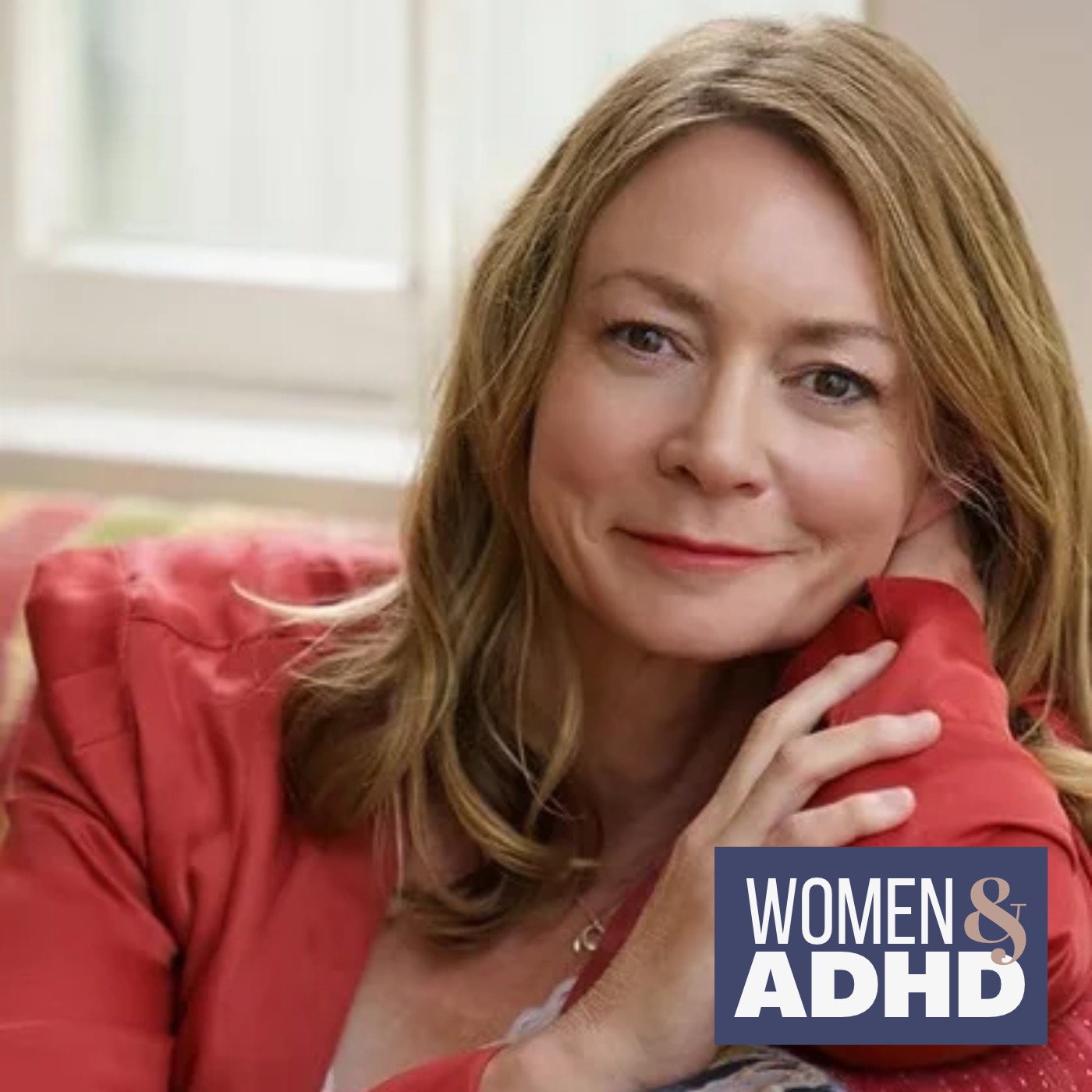
Amanda McCracken: ADHD, limerence, and learning to receive love
About This Episode
Episode 220 with Amanda McCracken.
Amanda is an award-winning journalist and the author of “When Longing Becomes Your Lover: A True Story of Overcoming Limerence.” She also hosts The Longing Lab podcast and has given a TED talk on how longing keeps us from healthy relationships.
Amanda was diagnosed with ADHD at 36, after an email from her dad. She didn't connect it to the pattern running through her love life until she was writing her memoir. That pattern is limerence: obsessive romantic longing for someone you've idealized and put on a pedestal.
We talk about how ADHD traits like hyperfixation, perfectionism, and difficulty being present can shape the way women experience attraction. We also cover what it takes to move toward secure, trusting love.
Key topics:
- Getting an adult ADHD diagnosis, and why Amanda dismissed it for years
- Being the "good kid" next to a sibling who needed more support
- What limerence is, and how hyperfixation can make crushes feel all-consuming
- Masking, perfectionism, and the fear that someone will find the "real you"
- Why receiving love felt wrong, and how self-worth fits in
- How purity culture and Christian-pop romantic language blurred devotion and crushes
- The therapy turning point: "You're in love with the longing"
- Coping before diagnosis: drinking, hair-pulling and rigid control
- What was different about meeting her husband
- ADHD, creativity, and writing your way through heartbreak
- Menopause or ADHD? Executive function and cognitive load
Website: amandajmccracken.com
Instagram: @amandajmccracken
Links & Resources:
- Amanda’s book: When Longing Becomes Your Lover: Breaking from Infatuation, Rejection, and Perfectionism to Find Authentic Love: A True Story of Overcoming Limerence
- Amanda’s TED Talk: “How longing keeps us from healthy relationships”
- Amanda’s podcast: The Longing Lab
- - - - -
Episode edited by E Podcast Productions
- - - - -
Women & ADHD coaching: www.womenandadhd.com/coaching
- - - - -
Work 1-on-1 with Katy: www.womenandadhd.com/katy
- - - - -
Order the “Hey, it’s ADHD!” course: www.womenandadhd.com/adhdcourse
- - - - -
Did you love this episode? Click here to pledge a one-time donation to the podcast!
- - - - -
If you are a woman who was diagnosed with ADHD and you’d like to apply to be a guest on this podcast, visit womenandadhd.com/podcastguest.
Instagram: @womenandadhdpodcast
Tiktok: @womenandadhdpodcast
Twitter: @womenandadhd
Facebook: @womenandadhd
Advertising Inquiries: https://redcircle.com/brands
Privacy & Opt-Out: https://redcircle.com/privacy
[SPEAKER_01]: If I felt like I made a mistake, or I had wasted time with these people, if I wrote something, if I created art from it, then it felt like I had made up for my mistake. [SPEAKER_01]: And so that was a hard part actually when I had a Zoom call with a publisher. [SPEAKER_01]: And she's like, you know, you really have to cut some of these scenes. [SPEAKER_01]: She was like, you know, Amanda, these stories have already served you. [SPEAKER_01]: They don't have to be published to still have served you.
[SPEAKER_00]: Hello and welcome to the women and ADHD podcast. [SPEAKER_00]: I'm your host, Katie Weber. [SPEAKER_00]: I was diagnosed with ADHD at the age of 45, and it completely turned my world upside down. [SPEAKER_00]: I've been looking back at so much of my life. [SPEAKER_00]: School, jobs, my relationships, all of it with this new lens, and it has been nothing short of overwhelming. [SPEAKER_00]: I quickly discovered I was not the only woman to have this experience and now I interview other women who like me discovered in adulthood they have ADHD and are finally feeling like they understand who they are and how to best lean into their strengths both professionally and personally.
[SPEAKER_01]: Hello there! [SPEAKER_00]: Before I introduce this week's guest, I want to take a moment to remind you that wherever you are on your ADHD journey, women and ADHD.com has the resources to meet you where you're at. [SPEAKER_00]: If you're in learning mode, we have tons of support. [SPEAKER_00]: free downloadable infographics, comprehensive guides, and our recommendations for self-tests specifically for women. [SPEAKER_00]: And of course, there's more than 200 episodes of this podcast.
[SPEAKER_00]: If you want a more comprehensive deep dive, our self-led course called, hey, it's ADHD, is a great next step you can take your own pace. [SPEAKER_00]: And if you're ready for more structure and personalized help, our ADHD coaching team is here for you with strength space support to help you move past the overwhelm and feel more like yourself again. [SPEAKER_00]: Wherever you are in your ADHD journey, make sure to visit us at women and ADHD.com. [SPEAKER_00]: Also, if you've been listening to this podcast and you have found these interviews to be helpful, [SPEAKER_00]: The best way to pay it forward is to leave a review so that other women like you can find this podcast and these conversations and know that they are not alone and they're not simply lazy or just depressed or broken.
[SPEAKER_00]: But they have ADHD. [SPEAKER_00]: Please stick a moment to head to Apple podcasts or audible or you can leave feedback on individual episodes on Spotify. [SPEAKER_00]: And if that feels like a little too much right now and I totally get it, [SPEAKER_00]: you can just quickly hit those five stars. [SPEAKER_00]: In fact, before you forget, why don't you just pause right now and go do it? [SPEAKER_00]: I promise we will all wait for you. [SPEAKER_00]: Okay, here we are at episode 220 in which I interview Amanda McCrackett.
[SPEAKER_00]: Have you ever fallen hard and fast for someone? [SPEAKER_00]: Thought about them constantly and then suddenly pulled away from them when they were actually kind to you? [SPEAKER_00]: For many of us with ADHD romantic attraction can feel a different. [SPEAKER_00]: The thinking goes that ADHD brains tend to seek stimulation and the rush of a new romance delivers it. [SPEAKER_00]: Add that to our tendency to fixate on whatever fascinates us, a lot of attention for the person we'd like, and a sudden shift to someone new in a crush we can't stop thinking about.
[SPEAKER_00]: When it becomes obsessive romantic longing, it's called limerance. [SPEAKER_00]: My guest today, Amanda McRacken, lived this for decades. [SPEAKER_00]: Amanda is an award-winning journalist and the author of When Longing becomes your lover, a true story of overcoming limmerance. [SPEAKER_00]: She also hosts the Longing Lab podcast and has given a TED talk on how longing keeps us from healthy relationships. [SPEAKER_00]: Amanda was diagnosed with ADHD at the age of 36. [SPEAKER_00]: She didn't connect ADHD to her crushes until she was writing her book.
[SPEAKER_00]: In this conversation, Amanda looks back at what it was like to be the good kid next to a brother who needed more support, and why love that came easily, always felt wrong. [SPEAKER_00]: We talk about how alcohol and hair pulling were ways of coping before she knew she had ADHD, how ADHD fed her creativity, and she also shares the mantra that helped her heal, and how her writing changed once she was in a steady loving relationship. [SPEAKER_01]: If you've ever had a complicated relationship with love, longing, and desire, you definitely want to hear Amanda's story.
[SPEAKER_00]: Enjoy. [SPEAKER_00]: Amanda, thank you so much for joining me today on the Women in ADHD podcast. [SPEAKER_00]: It's so great to have you. [SPEAKER_01]: Thanks for having me, Katie. [SPEAKER_01]: It's great to be here. [SPEAKER_00]: So let's get started. [SPEAKER_00]: I want to talk about your adult ADHD diagnosis because I don't know if you mentioned this in your book, but I think I was listening to an interview that you had given on another podcast where you said it was actually your dad who kind of tip you off that maybe you should look into this.
[SPEAKER_00]: But you also mentioned that your brother was diagnosed in childhood. [SPEAKER_00]: So I want to hear about your adult diagnosis, how old were you and what were some of those signs that you
[SPEAKER_01]: Yeah, so I was 36 and my parents both of them had been saying for a long time that [SPEAKER_01]: How we think you might have ADHD or ADDs, what they refer to it as. [SPEAKER_01]: And my brother was highly ADHD and been medicated since he was little. [SPEAKER_01]: And I had thought, I'm not, I'm not like that. [SPEAKER_01]: I don't have the hyperactivity. [SPEAKER_01]: We're just, we are very different people. [SPEAKER_01]: So I was like, no, whatever. [SPEAKER_01]: My mom was a third-grade teacher.
[SPEAKER_01]: And then I, [SPEAKER_01]: university professor, and I feel like she was always on the witch hunt, kind of be like, oh, that person has it, that person has it. [SPEAKER_01]: I'm like, don't try to diagnose me. [SPEAKER_01]: And then when I was in when I was 36, my parents, my mom was out here visiting, and we were, I was out to dinner with a guy that I was dating, and she must have relayed my father kind of how distracted I was, even in the conversation with him. [SPEAKER_01]: It was my father
[SPEAKER_01]: When my dad sends me a letter via email, I know he's serious about something so it was like your mother and I have thought you have ADHD for quite a while, but you've been able to you know manage and be successful academically and so on and so forth, but. [SPEAKER_01]: Now we think it's getting to your social life, AKA my dating life specifically. [SPEAKER_01]: And that triggered me. [SPEAKER_01]: I was like, all right, you got my attention now because this is part of my life that I feel unsuccessful at and I need to figure this out.
[SPEAKER_01]: So I thought, okay, my went and told him for Father's Day, I went and saw my PCP and took a test. [SPEAKER_01]: I mean, basically, that's all it was. [SPEAKER_01]: It was like a very simple, [SPEAKER_01]: I guess I was lucky in some ways because I didn't have to seek out, like, it maybe it would be interesting still to seek out, like I didn't complete psychiatric diagnosis or whatever. [SPEAKER_01]: C-C-S-I-Ciatros, but it was just my primary care physician, like, circle, some things.
[SPEAKER_01]: She was like, yeah, looks like it. [SPEAKER_01]: Let's start you on a small dose of, I think it was, at or all, I've tried several different things. [SPEAKER_00]: So I'm curious when they said it was affecting your dating life or your emotional life. [SPEAKER_00]: What do you think they met by that at the time? [SPEAKER_01]: I think they just noticed especially how distracted I was when I was out specifically at that dinner with that guy and how I was not in tune with him and our conversation and wasn't maybe giving him
[SPEAKER_01]: somebody out on a date might deserve, and I don't know if that sounds weird, but I know what their concern was because I still do it sometimes with my husband, where I'm just like boom, boom, boom, boom, boom, you know. [SPEAKER_01]: So instead of being really centered in present, [SPEAKER_00]: Right, difficulty being present in conversation because I sort of feel like usually with a new person or like we really hyper focus, right, and so that's interesting to kind of notice that this guy wasn't new.
[SPEAKER_01]: So I see a little while. [SPEAKER_01]: got it interesting. [SPEAKER_00]: All right. [SPEAKER_00]: And now you also mentioned that like you as growing up, you were kind of the older sibling of a child who needed more help and intervention, right? [SPEAKER_00]: And so I I've had that many guests actually who kind of developed a sense of their self-worth based on how competent and and how little they like need it, right? [SPEAKER_00]: And so that developed into them. [SPEAKER_00]: anxiety or perfectionism and high-perferior nodding.
[SPEAKER_01]: You're like, you're all of that. [SPEAKER_01]: All of that. [SPEAKER_01]: Yeah, for sure. [SPEAKER_01]: Yeah, there wasn't room for me to like, I felt like in some ways, my parents would say, you know, they were there. [SPEAKER_01]: They were, they were there for me whenever, whatever I needed. [SPEAKER_01]: But in a lot of ways, there wasn't really room for me time for me to screw up. [SPEAKER_01]: So because they were had to deal with my brother in a lot of ways. [SPEAKER_00]: Yeah, I feel like I've seen that in kind of [SPEAKER_00]: adults who are socializes girls or girls who were like, wanted to be the good, had to be the good kid, right, almost a sense of survival.
[SPEAKER_00]: But you also talk about some like really early trauma in your history and from birth, right, some attachment trauma that you talk about in your, in your book, [SPEAKER_00]: How do you kind of parse that and the ADHD and I guess we'll kind of get into some of the attachment issues or, you know, attachment stuff that you and, um, failed for yourself. [SPEAKER_00]: I guess through this journey of you discovering, you know, your relationship to romance and love and partnership. [SPEAKER_00]: I don't know what I'm asking.
[SPEAKER_00]: What was my question? [SPEAKER_01]: I guess it was sort of well, I think the connect is it like talking about the the early childhood trauma around my birth and how that connects to 80. [SPEAKER_01]: I guess. [SPEAKER_00]: I guess. [SPEAKER_00]: And the attachment styles in terms of like looking back over the course of your life and thinking like where did this habit of liberal and speak in? [SPEAKER_00]: Like what what what what what what answers have you come up with for yourself in terms of like
[SPEAKER_01]: Right, so a lot of people do say that Limerence, or this for people who don't know what that is, like obsessive romantic longing for somebody you've hyper fixated on and put on a pedestal, you've idealized. [SPEAKER_01]: Often comes from some kind of childhood trauma, or like micro traumas that have built up. [SPEAKER_01]: And so in writing my book, I was like, I don't really think I have major childhood trauma. [SPEAKER_01]: except perhaps maybe my birth. [SPEAKER_01]: And I mean, but birth itself is dramatic, right?
[SPEAKER_01]: So I'm like, is this worth, is it worth including, right? [SPEAKER_01]: But the more I dug, I thought, maybe it is, because I certainly think it had some effect on my attachment style. [SPEAKER_01]: romantic attachment style. [SPEAKER_01]: And my mom, when I was, when during delivery, she had a stroke. [SPEAKER_01]: And so they, they didn't know she was having a stroke, but they pulled me out minutes before she had two grandma seizures. [SPEAKER_01]: And then she had to stay in the hospital for three weeks.
[SPEAKER_01]: Well, I went home with my father's mother, my grandma Nancy. [SPEAKER_00]: So we were separated for three weeks. [SPEAKER_01]: And so that's why I was like, [SPEAKER_01]: Is that enough to make a difference? [SPEAKER_01]: And the research says that it is. [SPEAKER_01]: And then, you know, I was reading some of the research that Gabor Mate has put out there, related to ADHD and childhood trauma. [SPEAKER_01]: And it seemed to be a correlation for me. [SPEAKER_01]: So that's how I associated with where my perhaps like disorganized attachment style came from.
[SPEAKER_01]: So that's, and then therefore I can assume what the conclusion that I make later in the book is that I was afraid of getting too close to someone for fear that they that I would hurt them in the end, which is what I so the other piece of the story is that what I was growing up this is significant my mom would talk about. [SPEAKER_01]: the birth almost like this legend and our family. [SPEAKER_01]: And I would ask her why she bursts this blood vessel in her brain and she would always say, well, you could make up your mind then, can't make it up now, you kept going in and out of the birth canal.
[SPEAKER_01]: And which basically, I didn't realize this until I was in my 30s and I was writing a story about my birth. [SPEAKER_01]: And I was like, oh, that basically translates to its your fault. [SPEAKER_01]: which, you know, when I brought it up to my mom, she was like, oh my gosh, yeah, it does, but that's not what I meant, of course. [SPEAKER_01]: It just became humor, a way of masking some trauma. [SPEAKER_01]: And, but to me, because I am, I do, I do like, perseverate over decisions, and I always afraid of making the wrong decision.
[SPEAKER_01]: So, I feel like this indecision piece and fear of making the wrong decision perhaps is sometimes linked to that, like that's just who I was.
[SPEAKER_01]: So it's a drastic conclusion to make, but that's kind of where I'm at with it. [SPEAKER_00]: Yeah, and I think also a theme throughout your book too is this desire for control, the ways in which we try to create control out of chaos, right? [SPEAKER_00]: Which I think is something that a lot, we see a lot with adult diagnoses, especially. [SPEAKER_00]: But just with ADHD, like the various ways it shows up for us. [SPEAKER_00]: In terms of perfectionism and even like what you're talking about like the personalization around trauma, right?
[SPEAKER_00]: Like I'm responding, you know, this must be my fault. [SPEAKER_00]: Somebody's in a bad mood. [SPEAKER_00]: It's something I did, right? [SPEAKER_00]: And the way in which we get to this place of feeling like [SPEAKER_00]: this has to be something I need to fix. [SPEAKER_00]: It's my responsibility to fix that, which I guess, you know, is in its own way a trauma response too. [SPEAKER_00]: So, I feel like we spend our lives trying to parse all of the different ways in which this adds up to who we are and the puzzle that we are.
[SPEAKER_01]: Right, I forgot about that piece of the control, like trying to like manage this. [SPEAKER_01]: This chaos that I was born into and how that, you know, seeps into our lives later. [SPEAKER_01]: And when you saying that also made me think my daughter's often saying, is it my fault, is it my fault? [SPEAKER_01]: I'm like, oh my gosh, what am I saying? [SPEAKER_01]: Or what am I doing to make her worry that it's her fault? [SPEAKER_01]: Or if it's anybody's fault, you know? [SPEAKER_01]: So something I'll be working on in parenting.
[SPEAKER_00]: So let's talk about the book. [SPEAKER_00]: It's an incredibly emotional vulnerable read and I imagine it must have been incredibly healing to write it and put all of this stuff together for yourself. [SPEAKER_00]: When longing becomes your lover and a true story of overcoming limmerance. [SPEAKER_00]: So you talked a little bit about limmerance and I think we'll talk a little bit about kind of that, [SPEAKER_00]: connection between ADHD, traits and, and, and, limmerance, but why don't you walk us through how it all started for you?
[SPEAKER_00]: Like, how do you remember, what was the earliest memories that you have looking back at this tendency to, as you say, kind of put somebody on a pedestal, but also simultaneously fear that involvement with you might somehow be destructive, right? [SPEAKER_01]: I think a lot of kids do have crushes in their elementary school ages, but I specifically remember one guy in particular ever since third grade even all the way up into high school. [SPEAKER_01]: Um, this one guy had a crush on and interestingly, I saw him at the my 15 year reunion.
[SPEAKER_01]: He was quite quite complimentary, but, um, which made my third grade self want to like cheer. [SPEAKER_01]: But, um, you know, I remember even in fifth grade, uh, and I have the scene in the book where I was just, [SPEAKER_01]: crying on the couch over this guy, liking my other friend and me feeling completely left out. [SPEAKER_01]: And so I think, and then it became like this like organizing force in my life where it's like, I can tell you almost every year, every year or school year that I had, who was the crush?
[SPEAKER_01]: it was is something I think that was just like entertaining for my brain to hyper fixate on these particular people that I thought were perfect in some way idealized in some way that would make me feel more perfect if that makes sense better and more complete in some way so that and then that continued. [SPEAKER_01]: all through high school and the college, I remember my friends and high school saying, so we're jokingly saying, you know, that I was, I like the flavor of the month that I would jump from one to the next to the next, but I didn't have any serious relationships, not until probably my senior year in college.
[SPEAKER_01]: And then there was a significant rejection there that I felt that I write about in the book, too. [SPEAKER_01]: That, in fact, to me, but it wasn't really until I was writing the book that I made this connection between ADHD and Limmerance. [SPEAKER_01]: I think it was reading an article, and I think it's called like ADD attitude, ADD attitude magazine. [SPEAKER_01]: Yeah, and it was something about like crushes and ADD, and I was like, oh my gosh, duh, this makes sense. [SPEAKER_01]: Why I would hyper fixate on these people.
[SPEAKER_01]: And [SPEAKER_01]: Um, and study them too, um, research them, like know that try to know them inside and out, you know, and I think maybe that's the perfectionist part of me and too, like I'll prove that I know you, um, I can please you. [SPEAKER_01]: So they're, I think that's a little bit of the background, hopefully that answers your question without me rambling too long. [SPEAKER_00]: Yeah, totally, right? [SPEAKER_00]: Well, and I think, you know, also a facade or a character around ourselves to like this best version of ourselves to put forth to somebody is really the essence of masking, right?
[SPEAKER_00]: And this element that we talk about a lot with neurodivergence, which is like, there's the real me, and then there's this version of me that shows up for other people. [SPEAKER_00]: And it's like, there's a lot of theater around that, but I think there's a lot of kind [SPEAKER_00]: romantic play that goes into that too, right, of like creating somebody, you know, I had the story I've shared this on my podcast before, but when I first, you know, was started to get serious with my now husband 25 years ago, I wrote him this whole letter on his birthday and we went out for lunch, his mother like bought us these, this really fancy reservations at a, [SPEAKER_00]: place near here.
[SPEAKER_00]: The Mohawk House. [SPEAKER_00]: I don't know if you know it. [SPEAKER_00]: This is very fancy resort around here. [SPEAKER_00]: And like we went out for lunch and I wrote him a letter basically to break up with them. [SPEAKER_00]: And so interestingly, you know, he wouldn't allow it. [SPEAKER_00]: He thought it was silly and was like, don't ruin my happy birthday. [SPEAKER_00]: And thankfully, didn't [SPEAKER_00]: realized it was not what I actually want. [SPEAKER_00]: But but I think it came looking back through the ADHD diagnosis.
[SPEAKER_00]: I look at that moment as as a moment that I've had in my life a lot where when I start to get too close to somebody I back away and put that [SPEAKER_00]: drawbridge up because I'm like once you discover the real me you will inevitably be disappointed and I need to keep you out of distance and this was like the first person that broke through that and so now like as I was reading your book I was thinking like that feels like very similar like very aligned to the way in which you were talking about this distance that you keep somebody at while also [SPEAKER_00]: being enamored and fantasizing about them, I'm curious if you have some thoughts about this notion of like the quote unquote real me versus the me that I create for other people.
[SPEAKER_01]: Yeah, that's interesting. [SPEAKER_01]: Yeah, I don't think I know I know I don't dive into like masking, you know, in my book. [SPEAKER_01]: I know I do talk about like the fear of certain people, especially the artist, my long-term limmer and object that uh, [SPEAKER_01]: I was really fearful of being feeling, looking imperfect or ugly around. [SPEAKER_01]: But I definitely kept people, for two different ways, I would keep a little distance. [SPEAKER_01]: I would keep people at a distance by idealizing them and putting them on a pedestal.
[SPEAKER_01]: But then people who did get too close, like, even a Dave, might now husband at one point in the soldier that I talk about in the book, when they got showed too much interest, too
[SPEAKER_01]: get away, I just strongly felt this repulsion. [SPEAKER_01]: And I never really quite understood, especially with those guys, why I wanted this distance. [SPEAKER_01]: And that would make sense, I think, the fear of them, [SPEAKER_01]: getting too close that maybe they might discover the real me. [SPEAKER_01]: But there was part of me that I feel like the bigger answer to that question, why am I pushing these guys away is that I didn't really know how to receive love. [SPEAKER_01]: And I feel like I'm still working on that.
[SPEAKER_01]: I was really good at like giving it to these guys that I was obsessive obsessing about. [SPEAKER_01]: But receiving it from somebody who was genuinely interested in me and caring, [SPEAKER_01]: really weird and Iggy, like, wrong. [SPEAKER_00]: Yeah, you're reminding me of that quote. [SPEAKER_00]: I just, I think I thought maybe it was Oscar Weld, but I just looked it up at Scratcho Marks, but that quote, I don't want to belong to a club that would have me as a member. [SPEAKER_00]: And I think it kind of speaks to how complicated and our sense of self-worth is, you know, as women, as women with ADHD too.
[SPEAKER_00]: And this notion that if somebody were to love me
[SPEAKER_00]: You know, not worth it, right? [SPEAKER_00]: Because anybody who finds me lovable must be either fooled or flawed in some way. [SPEAKER_00]: So I mean, I think it's probably not on that uncommon. [SPEAKER_00]: If Groucho Marx was talking about 100 years ago, right? [SPEAKER_00]: This sentiment. [SPEAKER_01]: Yeah, and I think you touched on that like worth it, like worthiness, like I, and especially as an athlete, I feel like growing up, but nothing was really worth, [SPEAKER_01]: Anything unless I had suffered unless I had chased after it and proved myself worth so if I didn't get to prove myself to someone and they just were like Oh, I'm really interested in you right away.
[SPEAKER_01]: It was like no, no, no, no Like that can't be possible you're lying. [SPEAKER_01]: There's something false about you because I haven't gotten a chance to really really prove myself Oh my goodness. [SPEAKER_01]: That's so true, right?
[SPEAKER_00]: I was actually just like reading a book about like ADHD coaching and this and the difference between fixed mindset and growth mindset and that fixed mindset is always thinking about like outcome versus versus sort of growth in the moment and what I can learn from this and there is sort of using an example similar to what you were just talking about this notion of like the goal is to like get to an end that is. [SPEAKER_00]: sort of difficult or beyond me as opposed to the goal being growth in general.
[SPEAKER_00]: So I don't know. [SPEAKER_00]: I don't know how they're connected, but I was just thinking about that when you were talking about this notion of like suffering. [SPEAKER_01]: Yeah, there's something I put it about in my book about like growth mindset though, and with relationships, and then I forget the other one, destiny. [SPEAKER_01]: mindset, right, which is more like the growth is like, okay, how can we work on things in them? [SPEAKER_01]: Like you were saying, how can potentially grow together and work on this?
[SPEAKER_01]: Where's the destiny? [SPEAKER_01]: People who had that mindset were more likely to have one night stands, likely to be comparing that one person to the next person, and... [SPEAKER_01]: I think that was the key piece like comparison to like, is this, can this be it? [SPEAKER_01]: Is this enough? [SPEAKER_00]: Yeah, and now I'm curious about how that applies to that idea of struggle or having to like earn something and work hard for it and how you relate that to your virginity and and remaining a virgin well into adulthood and also like the Christian element of it, right?
[SPEAKER_00]: The kind of [SPEAKER_00]: faith and devotion element, too, right? [SPEAKER_00]: Like they all feel like they're all together in a soup. [SPEAKER_01]: Yeah, I mean, I hadn't associated my pattern of intense crushes with what I had learned in purity culture until even I was writing this book, too. [SPEAKER_01]: And I [SPEAKER_01]: I've realized, you know, growing up the purity culture, yes, a plan of the seed for me to remain a virgin and to, you know, till I was like 41, but it was a, it was a compilation of things, you know, I think that that also kind of kept me felt like I, it kept me safe from feeling like I was going to make a mistake with the wrong guy.
[SPEAKER_01]: and being out there and hook up culture, like, I wanted to play, but I wanted to have some boundary. [SPEAKER_01]: I kept some goal, you know, that I could try to achieve, like, that I would wait to have sexual intercourse and I've committed in loving relationship. [SPEAKER_01]: And but the purity culture, I think that affected the Lemurance was that we were taught to wait obviously wait until we were married to have sex, but also like to put Jesus on a pedestal and then there was always like romantic language in the music that we are listening to in the 90s, the Christian rock that also put it put Jesus on a pedestal but also the language sounded very romantic.
[SPEAKER_01]: So it was very confusing as a teen growing up. [SPEAKER_01]: I'm like are we talking about [SPEAKER_01]: Dating, are we talking about Jesus? [SPEAKER_01]: And so putting somebody up on a pedestal and keeping them safe at a distance meant that you were, you know, it's a some way safe from making a mistake. [SPEAKER_00]: Right, and I think also kind of plays into this notion that there is a perfect version of yourself as opposed to accepting [SPEAKER_00]: the inevitability of a flawed version of yourself, and feeling like that is a perfectly worthy version of you to be loved and valued as well, right?
[SPEAKER_01]: True, true, and that there's a perfect person out there, like all those poor guys in, you know, a lot of period cultures, like, this feels so sorry for a lot of the women, but I think those guys too are at a disservice because here we are putting them on a pedestal and they're not perfect. [SPEAKER_00]: Right? [SPEAKER_00]: Yeah. [SPEAKER_00]: Yeah. [SPEAKER_00]: So then what was the turning point for you then as you write about in the book like that aha moment for you that this was a behavior that, you know, a pattern of behavior that you really wanted to work on with your therapist?
[SPEAKER_01]: Yeah, I started seeing my therapist probably
[SPEAKER_01]: You know, there's the precipice that feels like a turning 40 and approaching and feeling like I am not making any headway in my dating like anything. [SPEAKER_01]: I was becoming more from promiscuous and with risky behavior and I mean, yeah, just like ridiculous. [SPEAKER_01]: And so I, when I started seeing her, we're working on looking at all the pattern so forth in the kind of the turning. [SPEAKER_01]: point was when she said, and that's the title of my book, Amanda Longing is your lover to realize that I was more in love with this longing for love.
[SPEAKER_01]: This romanticizing, the roominating about what could be, and also beating myself up badly for what didn't happen, it was really good at that. [SPEAKER_01]: And there was something that was really almost satisfying about going back and chewing
[SPEAKER_01]: So that's when I realized I had work to do. [SPEAKER_01]: And one of the key things I remember telling her that, I'll figure this out. [SPEAKER_01]: And she was like, no, Amanda, you will never figure this out. [SPEAKER_01]: You have to feel your way through it. [SPEAKER_01]: Which is kind of corny these days. [SPEAKER_01]: I know people talk about that, but it's so true as someone who was always trying to think her way through things [SPEAKER_01]: I wasn't very good at feeling paying attention to how things felt in my body, especially as an athlete.
[SPEAKER_01]: I'd gotten really good at tuning that out. [SPEAKER_01]: So that was like we did a lot of somatic work in trying to figure out how things felt. [SPEAKER_01]: Even like the resistance, even when I started dating Dave and he came with me to therapy and just feeling into the resistance I had to him being so available and trying to work through that. [SPEAKER_01]: That was really powerful. [SPEAKER_00]: Yeah, you know, it's I feel like there's there's so many similarities to a lot of the guess I've had, especially guess who were diagnosed with borderline personality disorder, which is a common kind of mood disorder diagnosis prior to ADHD or autism diagnosis where it's like.
[SPEAKER_00]: You know, the finding your sense of self worth outside of yourself and in another person's interest in you attached you know, but also like we've talked in the past, especially when it comes to like decision making it's much easier to not be the decision maker to like put your to like kind of attach yourself to other people who are stronger. [SPEAKER_00]: you know who will make choices for you because it's easier to be disappointed by their choice than to worry about being the person who disappoints others, right?
[SPEAKER_00]: And so there's like this general sense of self-denial that I think a lot of us experienced as we grew up and related to people kind of putting a lot of faith and like I said are our sense of self-worth and self-acceptance in the hands of another person who either uses it carefully and you know with
[SPEAKER_00]: And this all kind of feels central to this notion, wrongness that I think a lot of us with ADHD grew up with, right? [SPEAKER_00]: That there's something inherently wrong about me. [SPEAKER_00]: And I'm just like, I'm not even like prepared. [SPEAKER_00]: I have no idea what I'm talking about right now. [SPEAKER_00]: I'm just kind of thinking through this. [SPEAKER_00]: The similarities here around, you know, a lot of what you talk about in your book. [SPEAKER_00]: I think it's very, [SPEAKER_00]: You know, I think it speaks to as just a lack of like self efficacy or self belief that so many of us experience growing up that, you know, that.
[SPEAKER_00]: It's all a matter of how it shows up in our life around who we put control, you know, this, like you said, like when you talked about, I think you called it like sexual anorexia, right, when you were talking about virginity and this again, like this desire for control and often sometimes feeling so out of control that we want to put that control and we want to put the, we want to put somebody else at the steering wheel, the driver's wheel in our life a lot of the time. [SPEAKER_01]: Yeah, I think that's why I was drinking to kind of like numb myself out of thinking so much.
[SPEAKER_01]: And that's when I was saying I was being more reckless and more promiscuous because, and you know, I say in the book that I think I got to a point where I thought, well, if somebody makes that decision for me, if I'm so numb doubt, like, you know, basically, [SPEAKER_01]: chooses to have sex with me without me, you know, giving the A.O.K. [SPEAKER_01]: or whatever. [SPEAKER_01]: It never, it never happened, but I definitely put myself in several situations where I was like, what are you doing, Amanda?
[SPEAKER_00]: Like, [SPEAKER_01]: Yeah, this is ridiculous because of that fear of making that choice, right? [SPEAKER_01]: If I somebody else made it for me, then then I couldn't blame myself. [SPEAKER_01]: But of course I know I would blame myself one way or the other probably. [SPEAKER_00]: But I think the worth the self worth piece was is really key. [SPEAKER_01]: And I remember when my therapist said we really need to work on. [SPEAKER_01]: yourself worth and that you believe you were worthy of love.
[SPEAKER_01]: And I said, you tell everybody that don't you? [SPEAKER_01]: And she's like, yeah, I do, but you really need it. [SPEAKER_00]: Yeah. [SPEAKER_01]: And it's it really boils. [SPEAKER_01]: It does really boil down to that. [SPEAKER_01]: And I had that mantra in the book where I she had me start writing down. [SPEAKER_01]: I am ready for and worthy of a deeply intimate and loving relationship. [SPEAKER_00]: And I do it's such a
[SPEAKER_01]: piece of my healing too to actually start writing it and saying it out loud even if I didn't really believe it. [SPEAKER_01]: And where, and where I felt like I had lost my sense of voice or didn't trust my voice, I still don't really know where that comes from. [SPEAKER_01]: Maybe if somebody studied my childhood and my parents, they might understand better, or maybe it's just how I'm wired. [SPEAKER_00]: right well i think it's probably all of the above right like i think it's you know again like thinking about that i that how deeply you needed to be the good kid and how like you know these these ideas around self-worth don't happen at a vacuum like i do think there are a lot of ways when you are a neurodivergent child that they're we're told those messages over and over again that there's like a right way to do things and then there's the way you naturally want to do things and so you learn to start [SPEAKER_00]: mimicking behaviors, you learn to stop listening to your inner compass, you know, you learn to start assuming that your way of thinking or that your first reaction might be wrong.
[SPEAKER_00]: And so then you kind of lack that inner. [SPEAKER_00]: that sense of trust and belief in yourself too. [SPEAKER_00]: So I think it's like that double-edged sword or the double whammy of the perfectionism and wanting to perform and being really, really high performing and having high standards for yourself and also feeling inherently like, if somebody were to find out what a mess you truly were, you would be in really big trouble. [SPEAKER_00]: And so it's like holding all of that together, right?
[SPEAKER_01]: Yes. [SPEAKER_00]: I think that's much more the archetype of the ADHD woman than [SPEAKER_00]: the like hyperactive mess, you know, I think it's much more that the swan badly paddling under the surface is the one that a lot of us relate to. [SPEAKER_01]: Yes, if somebody came visit in my house right now, they would realize where I am failing to perform, which is keeping things organized and picked up. [SPEAKER_01]: especially with the five-year-old. [SPEAKER_00]: Oh my goodness, you have a five-year-old.
[SPEAKER_00]: You're the thick of it. [SPEAKER_00]: Are you kidding me? [SPEAKER_00]: It's impossible. [SPEAKER_00]: It's like, what a shoveling it is snowstorm. [SPEAKER_01]: Yeah, yeah, exactly. [SPEAKER_01]: I'm like, I can only clean up her mess. [SPEAKER_01]: I can't clean up my mess. [SPEAKER_01]: And then I did tell her the other day I said, when I get really angry about your messes, I think this is true. [SPEAKER_01]: I said, I'm... [SPEAKER_01]: I'm upset with you for not picking up, but I'm really upset with myself for not having the energy and time to pick up.
[SPEAKER_01]: So I was trying to make her feel a little bit better. [SPEAKER_00]: Yeah, right? [SPEAKER_00]: I always found that triangle to be super helpful, the triangle of like happy bomb, happy child, clean house, you can only pick two. [SPEAKER_00]: And like for whatever reason that always helped me when I had those frustrating moments of really high expectations of like, God damn it, you know, I'm not, I went all of this stuff to happen all at once and then just being like, no, you actually, you can pick two.
[SPEAKER_01]: that's so true, I hadn't heard that, but that makes a lot of sense. [SPEAKER_00]: Oh, really, it's super helpful, visual. [SPEAKER_00]: Yes. [SPEAKER_00]: Cause then you're sort of like, oh, well, you know, honestly, the priority for me is happy child and then happy mom. [SPEAKER_00]: And then if my priority becomes happy house or clean house, then I have to be unhappy. [SPEAKER_00]: Yeah, everybody wants that. [SPEAKER_00]: Yeah, exactly. [SPEAKER_00]: But it's like permission, right?
[SPEAKER_00]: It's like we need that permission to not do everything. [SPEAKER_01]: Totally. [SPEAKER_00]: Yeah. [SPEAKER_00]: So now you, [SPEAKER_00]: Um, you had mentioned like the ways in which I cooked with ADHD before I knew I had it. [SPEAKER_00]: So, you know, we were just talking about like, you know, obviously drinking substance use is a big one. [SPEAKER_00]: Um, I think that sense of control around the, you know, you, the sexual anorexia, but we talked about like eating disorders are very common with ADHD and just like ways in which we get into very rigid behavior patterns where there was there other things that you looked back at after your diagnosis and look back and said like,
[SPEAKER_01]: Yeah, I just learned the words stemming the other like like a year ago or maybe even this year, but I always I'd always had I develop I say it's correctly tricking it till ammonia. [SPEAKER_01]: Yeah, and in like senior year in college when I had a ton of anxiety deciding oh my gosh What am I going to do with my life plus I was dating this guy that was like flying off to some French island That I was eventually never going to see again [SPEAKER_01]: So a lot of stress and so I developed and primarily pulling out my eyebrows and in eyelashes and and then when I started taking adder off for the first time, I can't say that it really helped my relationships, but I had eyebrows like for the first time in like.
[SPEAKER_01]: 15 years. [SPEAKER_01]: Like, I had them before, but I didn't have patchy eyebrows because the Adderall somehow was helping me, was helping me focus. [SPEAKER_01]: And in the past, I think the whole hair polling had helped me focus when I was reading, writing, grading papers, or just, I still do it if something I get an email that really pisses me off. [SPEAKER_01]: And I'm like, fuck, so, and people would always be like, why can't you squeeze a ball? [SPEAKER_01]: And I'm like, no, [SPEAKER_01]: I can't feel the intensity.
[SPEAKER_00]: Oh, yeah. [SPEAKER_01]: So yeah. [SPEAKER_00]: Huh, interesting. [SPEAKER_00]: Yeah, not uncommon either, too, right? [SPEAKER_00]: The sort of the compulsive behaviors that are then unexpectedly treated by the dopamine regulation medications. [SPEAKER_00]: And even if people keep talking about that now with GLP ones, this notion that GLP ones are reducing compulsive behaviors or you're seeing people like unexpected least after getting or stop smoking. [SPEAKER_00]: And yeah, right?
[SPEAKER_00]: I think that's a fascinating field in terms of the way [SPEAKER_00]: benefits from this medication, but anyway, the okay. [SPEAKER_00]: And so then how old were you when you met your now husband? [SPEAKER_01]: I was 40 and a half, right? [SPEAKER_00]: Okay, matters if you're hoping to still have a kid. [SPEAKER_00]: And what, what was different about this relationship? [SPEAKER_00]: What do you feel like kind of [SPEAKER_00]: change the tide for you. [SPEAKER_01]: I think he was different than a lot of the guys that I've been dating.
[SPEAKER_01]: I was finally a little bit more different timing was different. [SPEAKER_01]: Of course, you know, I think being 40 and a half and my grandmother turning 100 also sent me into a tail spoon to be like, I can't keep making the same mistakes or keep following the same patterns. [SPEAKER_01]: And so when Dave showed up and we met like on a rooftop bar through a mutual friend and we had known of each other for quite a while because we just had we've lived in the same town have a lot of the same circles and the one distinguishing thing that I often say is that I trusted him before I fell in love with him with these other guys that I felt like I was in love with.
[SPEAKER_01]: I didn't I didn't trust them. [SPEAKER_01]: I trusted them. [SPEAKER_01]: I guess I would say I I would trust them enough to get naked with them, but I didn't trust that they what they said was what they were going to do. [SPEAKER_01]: Does that make sense? [SPEAKER_01]: Oh, yeah, you know, like and with Dave, I was I was very open even when he got close. [SPEAKER_01]: I would say, you know, if you get physically too close or emotionally, I'm out. [SPEAKER_01]: Whereas in the past, I would just fly.
[SPEAKER_01]: I didn't say, I didn't tell the guys that. [SPEAKER_01]: So that was different. [SPEAKER_01]: He knew I was working through things and was willing to go to therapy with me. [SPEAKER_01]: He was very transparent about his emotions and, you know, he was kind. [SPEAKER_01]: He picked me up from the airport, took me to the airport, even months after we were dating, which I was feeling like there's that one cut off and when Harry met Sally, when they talk about after a few months, but they stopped doing that sort of thing, and he was still doing it.
[SPEAKER_01]: And you know, I mean, sweet letters and cards that in the past would have sent me running away. [SPEAKER_01]: So those are some of the things I feel like that were different, and he was very available. [SPEAKER_01]: That was another thing. [SPEAKER_01]: He didn't live far away. [SPEAKER_01]: He was like, you want to go out this week and sure. [SPEAKER_01]: Like, didn't keep me jumping. [SPEAKER_01]: I never, I was never like hanging on the edge of my seat, wondering if he was going to text me back or like, oh my gosh, did I really mess that up?
[SPEAKER_01]: So there's just a definitely a sense of security with him that I didn't have with other guys. [SPEAKER_01]: And I think I was finally ready for it at this point. [SPEAKER_00]: I think one of the things that really changed for me when I was diagnosed with ADHD because I've like I said I've been with my I was 45 so it was six years ago and I had been with my husband I've been with my husband for 25 years now, but one of the things I thought about when you know I used to always ask him like why are you with me like I know why I'm with you you're amazing you do all these amazing things you're so great this wonderful person but like.
[SPEAKER_00]: Why are you with me because it, and I don't think he ever took that question seriously. [SPEAKER_00]: I don't think he knew, he thought I was joking because he, I think it was beyond his understanding that I could have so little sense of self-worth given how much I was doing and how much I was capable of and so he would always have these like joky answers like, I don't know you smell good and we'd kind of laugh and then I'd sort of go back to this like, [SPEAKER_01]: No, I really want to know why.
[SPEAKER_00]: And I had this like aha moment after my ADHD diagnosis where I thought similar to your mantra, right? [SPEAKER_00]: Like I was like, I'm his favorite person in the entire world. [SPEAKER_00]: If I don't owe it to myself to stop dumping on myself all the time, I can owe it to him. [SPEAKER_00]: to show up and be the person that he loves and stop dumping on myself. [SPEAKER_00]: And it was like a very similar kind of intentional mantra where I've like still have to do that to this day, just being like, you are like, on these days where I feel like, oh my god, I can't get off the couch.
[SPEAKER_00]: What is wrong with me? [SPEAKER_00]: I'm so, I'm such a lazy piece of shit and all these messages that come into my head. [SPEAKER_00]: And I'll be like, no. [SPEAKER_00]: You are a very capable person. [SPEAKER_00]: You're intelligent. [SPEAKER_00]: You are driven. [SPEAKER_00]: You are a good partner. [SPEAKER_00]: And I like have to tell. [SPEAKER_00]: I have to like put myself up like Stuart Smallie. [SPEAKER_00]: Right. [SPEAKER_00]: Yeah. [SPEAKER_00]: And so it's almost like there is this externalizing of that like sense of worth right where I'm like if I don't at least owe it to myself at least I owe it to all of these people who believe in me to fake it to like make it.
[SPEAKER_00]: right and it's almost and now it's like I feel like I've been reforming these neural pathways over the years that I actually like have those moments less and less but there is like a real intentionality about having to say these things to ourselves and I'm a big fan of the mantra. [SPEAKER_01]: Yeah and I think I also was calling my parent. [SPEAKER_01]: I was calling my mom last while I was dating Dave. [SPEAKER_01]: I think that shows some sense of security like [SPEAKER_01]: Uh, I still call her when I'm having those days of feeling total like shit like I can't get off the couch or things are a mess and I cannot untangle my life for like a pick me up, you know, but now I'm realizing that I need to return the favor to her at this point.
[SPEAKER_01]: So yeah. [SPEAKER_00]: Uh, they suddenly can credible humans. [SPEAKER_00]: Uh, your parents did do have either of them kind of been diagnosed or self diagnosed throughout this journey.
[SPEAKER_01]: You know, I was associated with my mom and I being quite similar, but it was more recently, my mom said, you know, I think your dad might have more ADD than, like being have more ADD in terms of his ability to like, [SPEAKER_01]: organize and focus, but neither of them to be answer question either of them have ever been diagnosed would be interesting to see. [SPEAKER_01]: My mom is actually going to therapy now for body image issues at 75, which I think is beautiful and looking at like patterns that have been passed down from her mother.
[SPEAKER_01]: My grandmother Velder, who I talk about in the book, on the way down, you know, down the line. [SPEAKER_01]: So always room for improvement. [SPEAKER_00]: Right, especially I think when like a new girl enters the [SPEAKER_00]: picture too, right? [SPEAKER_00]: Like I think that was certainly having a daughter changed a lot for me in terms of what I wanted her to hear. [SPEAKER_00]: And again, that sense like I was talking about earlier where it's like, I may have these thoughts about my body all the time inside thoughts.
[SPEAKER_00]: But like I also know I can never say them out loud. [SPEAKER_00]: And I she can never hear them coming from me no matter because I was like, it stops. [SPEAKER_00]: It stops at this generation. [SPEAKER_00]: And so I think, you know, having those moments of [SPEAKER_00]: of saying like okay now by no longer giving them weight then we can they start to get quieter and quieter I think so yeah do you actually have any of your mantras up around your house I was just curious I think I need to do that I do love that no I don't have any of them up around my house but yeah my best friend is always has like sticky notes of quotes all over the place and I think [SPEAKER_01]: Yeah, especially the front door.
[SPEAKER_01]: I have a neighbor who does that. [SPEAKER_01]: So maybe I'll start picking doing that. [SPEAKER_00]: Now you had also mentioned, you know, how you've been thinking about how ADHD fueled your creativity in terms of writing your book and helping and hindering both your TED talk. [SPEAKER_00]: I've made it certainly. [SPEAKER_00]: You look back and think about how ADHD
[SPEAKER_00]: probably fueled your career as a writer. [SPEAKER_00]: I'm assuming, right? [SPEAKER_01]: Yeah, I was hoping you were going to ask that, actually I was still in my head. [SPEAKER_01]: Yeah, I think the most interesting piece for any writers that are listening or when with ADHD that have found themselves in lemurance and hyper fixating on crushes is that I felt like these guys were like my muses. [SPEAKER_01]: And so by, you know, [SPEAKER_01]: having these crushes, I would have, I would have creativity.
[SPEAKER_01]: I'd be able to feel like I could write poetically. [SPEAKER_01]: And then also, by writing, if I felt like I made a mistake, or I'd waste a time with these people, [SPEAKER_01]: If I wrote something, if I created art from it, then it felt like I had made, I had made up for my mistake, if that makes sense, I'd healed it, I'd covered it up, Why did it out in some ways by creating art? [SPEAKER_01]: And so that was a hard part actually when I was, I had a zoom call with an edit with my editor and she was like, it was actually the publisher.
[SPEAKER_00]: So definitely somebody I can't really argue with and she's like, [SPEAKER_01]: You know, you really have to cut some of these scenes and I started crying on the Zoom call with this person and she was like, you know, man, do these stories have already served you. [SPEAKER_01]: They don't have to be published to still have served you. [SPEAKER_01]: And I think that was really powerful because it felt like if I didn't make them real, then then I, then there's something about it that I had messed up.
[SPEAKER_01]: right. [SPEAKER_01]: So that was key. [SPEAKER_01]: And then I felt like, you know, by cutting them and letting them go and realizing that they had served me, I had learned from them. [SPEAKER_01]: And hopefully maybe I had taught these guys something in the process. [SPEAKER_01]: I don't know. [SPEAKER_01]: Then it was good. [SPEAKER_01]: It was good enough. [SPEAKER_01]: And then also I felt like, I remember when I was with Dave starting to date Dave and things were getting close.
[SPEAKER_01]: I'm like, how am I ever going to write anything creative again if I'm happy if I'm happily [SPEAKER_01]: healthy, you know, I'll be at sometimes boring, but mostly stable relationship. [SPEAKER_01]: And I feel like, you know, something just shifts, like, I think my daughter inspires me in different ways now, right? [SPEAKER_01]: They say children say things that you in ways that you never thought of before. [SPEAKER_01]: So that's that's the creativity journey I think with ADHD with me.
[SPEAKER_00]: Yeah.
[SPEAKER_00]: I was thinking about how that relates to the rise of social media, right? [SPEAKER_00]: And I think, you know, I feel like I'm thankfully a little too old for living online, the way people do, but I see, you know, that that performative element that people have with social media where it's like I cannot go someplace without filming it and recording it and then sharing it, right? [SPEAKER_00]: It's like I can't just enjoy being in the moment I have to [SPEAKER_00]: post about it, right, or it didn't happen.
[SPEAKER_00]: And this like reliance on then feedback from from likes and and whatever the algorithm and this weird notion that I find so fascinating, you know, this this compulsion that I think a lot of people [SPEAKER_00]: You know, of any generation, I don't think it's just a younger generation, but you know, I see people might just still doing it, but this, this way in which social media creates this reliance on feedback in order to experience anything. [SPEAKER_01]: Yeah, like documenting it, if it, if you haven't documented it for other people to consume, then it doesn't matter, or it's not meaningful.
[SPEAKER_00]: Yeah, like I've always been like, I'm, I'm super judgemental of people who film themselves while crying. [SPEAKER_00]: I don't know. [SPEAKER_00]: like, you know, and I, it really bothers me because I was, you know, for me, that's like the, the, the limit where I'm like, if I am ever at a point where I start crying and my first thought is I should probably be filming this like I was like, it's over like I'm sorry, that's just like too far. [SPEAKER_00]: And I'm sure like if somebody could give me a really good interesting, you know, retort on like why this is an important element of the [SPEAKER_00]: living your best life on social media, whatever I don't know.
[SPEAKER_00]: But for me, that's like always the part where I'm like, oh my god, please seek help. [SPEAKER_01]: Yeah, and I'm like, how many I drops did you throw on your eyes before you fell in love? [SPEAKER_01]: People opening their books, their new books, you know, and they're often they're like pretending wiping away tears or something, and it is an emotional moment, but I don't know. [SPEAKER_01]: I didn't get emotional about my book, [SPEAKER_01]: on camera, that's for sure. [SPEAKER_01]: It's hard.
[SPEAKER_00]: But I think again, it's the same sort of performative element of like it's not it's some things don't matter unless someone is viewing it or seeing it or sharing in it. [SPEAKER_00]: And there was something about what you were talking about with the writing and the muse and this notion of like. [SPEAKER_00]: needing an outside tether or anchor there in order for it to be, like, couldn't go worth it. [SPEAKER_00]: You know? [SPEAKER_01]: Yeah. [SPEAKER_01]: I'm always, I'm curious what how Taylor Swift's songs are going to change now that she's in a relationship.
[SPEAKER_01]: I'm feeling kind of been talking about that. [SPEAKER_01]: Yeah. [SPEAKER_00]: Right. [SPEAKER_00]: Now that she's happy. [SPEAKER_00]: Well, I read her last album was, you know, they talk about the like Shalant romance now and like the return of this unabashed roboticism that the Taylor and Travis have had and her last album was very kind of braggie about what is that, what the one song where she, it's called Wood or something where the whole thing is like, basically talking about how gigantic his penis is.
[SPEAKER_00]: Corrections. [SPEAKER_00]: So I don't know, it'll be interesting to see how that effects [SPEAKER_00]: Or even with having a child too, because I feel like buy a ability to concentrate and read. [SPEAKER_00]: I mean, I like sit and you know, my husband and I will always be like, what if we do? [SPEAKER_00]: Before we had kids like we just slept in and then we read the paper and then we thought about where we were going to go for dinner that night. [SPEAKER_00]: Like that's literally all we did on the weekends for children.
[SPEAKER_00]: And so I think about like, I'm always fascinated how people are able to continue. [SPEAKER_00]: with artistic focus, you know, after kids come along. [SPEAKER_01]: Oh, 100% yeah. [SPEAKER_01]: Now I'm like, is it perimenopause or is it just brain fog from several years of sleep deprivation with my daughter? [SPEAKER_01]: Or I don't know. [SPEAKER_00]: Oh my god, right? [SPEAKER_00]: I know. [SPEAKER_00]: I say that all the time about ADHD. [SPEAKER_00]: It's like, is this ADHD? [SPEAKER_00]: Or is this just because I'm an angry sleep deprived feminist living in post-Trump America?
[SPEAKER_00]: And like, right? [SPEAKER_00]: Right? [SPEAKER_00]: Who knows? [SPEAKER_00]: I think the answer is always like, yeah, all of the above. [SPEAKER_01]: Well, isn't that what I haven't totally followed all of this, but what is the, there's been a lot of reference to like, is it metapause or is it ADHD? [SPEAKER_01]: Is that the kind of the question that people have been asking or is it a combination? [SPEAKER_00]: Well, I think the question is, is it menopause or ADHD, or then the flip side of that is, were you managing until a certain time when you could no longer manage your ADHD symptoms, right?
[SPEAKER_00]: And so were you kind of like, I call it white knuckling it through life? [SPEAKER_00]: And then at some point the damn broke, either it was having a child, or it was hormonal changes from a very menopause, like something came along as the catalyst, that then [SPEAKER_00]: You could no longer compensate for your ADHD through whatever systems and structures you had and then your symptoms got a lot worse the symptoms being executive. [SPEAKER_00]: dysfunction, right? [SPEAKER_00]: And so again, it's like when we talk about executive dysfunction, who knows if it's trauma, if it's ADHD, if it's hormones, like really at the end of the day, we'll never know.
[SPEAKER_00]: I think what we really need to do is focusing on reducing the cognitive load so that we can function again, however that looks for us. [SPEAKER_00]: So yeah, that's my little executive
[SPEAKER_00]: So fascinating to just think about how, you know, that connection between I guess ADHD, which, you know, we talk about and think about so often is just being this physical hyperactivity or, you know, just sort of emotional stuff, but how. [SPEAKER_00]: It enters in so many of these seemingly disparate points of our life, right? [SPEAKER_00]: Food, relationships, rejection, sensitivity. [SPEAKER_00]: And now, you know, the exploration you've been doing in terms of love and limits and relationships, and really just value the work you're doing.
[SPEAKER_00]: And it's such an interesting read. [SPEAKER_00]: And yeah, so thank you for putting it out in the world and congratulations. [SPEAKER_00]: So are you working on something else now? [SPEAKER_01]: No, I'm just still trying to get the word out about this book. [SPEAKER_01]: potentially write some, I've got some other essays that I want to write around the power of writing your way into a happy ending and just kind of the question around fairytale, you know, with regards to, I think the Travis and Taylor wedding, you know, it's really amped up this idea of is the fairytale possible and is it okay to dream of the fairytale and so forth and.
[SPEAKER_01]: you know, ever since my own experience with Katie Kirk basically saying off-camera to me, you know, you just have fairytale princess syndrome. [SPEAKER_01]: And is there something wrong with that? [SPEAKER_01]: Like, where do you draw the line with like wanting that kind of like, it depends on how you define the fairytale, I guess. [SPEAKER_01]: So yeah, so that's kind of what I'm working out. [SPEAKER_01]: But no, [SPEAKER_01]: No other books right now in the mix, just enjoying trying to enjoy this one and get the word out.
[SPEAKER_01]: That's more than enough, yeah, right, give my daughter some more time and my husband some more time. [SPEAKER_00]: Yeah. [SPEAKER_00]: Well, it was been really lovely meeting you and chatting with you. [SPEAKER_00]: And I guess, you know, you have Amanda McCracken.com is your website, right? [SPEAKER_01]: Is there Amanda J. McCracken.com? [SPEAKER_00]: Oh, right. [SPEAKER_00]: Okay. [SPEAKER_00]: I will have that link in the show notes. [SPEAKER_00]: Don't worry. [SPEAKER_00]: Is there any other way people can reach out to you?
[SPEAKER_01]: Here's my book book of anybody wants to see. [SPEAKER_01]: I was curious if you saw the flowers or the body first. [SPEAKER_01]: I saw the flowers. [SPEAKER_01]: Yeah. [SPEAKER_01]: Okay. [SPEAKER_00]: Oh, interesting. [SPEAKER_00]: Nope. [SPEAKER_00]: This is the first time I just saw the body. [SPEAKER_00]: That's beautiful. [SPEAKER_00]: There are a lot of people don't see the body at first. [SPEAKER_00]: That's not what you see. [SPEAKER_00]: Yeah. [SPEAKER_00]: No. [SPEAKER_00]: I didn't even notice it until right now.
[SPEAKER_00]: That's beautiful. [SPEAKER_00]: And now I won't be able to unsee it. [SPEAKER_00]: But that's great. [SPEAKER_00]: So I'll have a link to your book. [SPEAKER_00]: And I guess Instagram is what's the best way for people to find you and reach out to you. [SPEAKER_00]: Your website? [SPEAKER_01]: Yeah. [SPEAKER_01]: So Instagram, Amanda J. McCracken. [SPEAKER_01]: They can contact me via my website, Amanda Jamecrackin.com, and I'm on TikTok at the Longing Lab, which is also the name of my podcast, The Longing Lab.
[SPEAKER_01]: Right. [SPEAKER_00]: Yes. [SPEAKER_00]: Wonderful. [SPEAKER_00]: And also, I'll put your TED Talk, too. [SPEAKER_00]: Congratulations on that. [SPEAKER_00]: I'll put your TED Talk link, too, in the show now. [SPEAKER_01]: Thank you. [SPEAKER_01]: How Longing keeps us from healthy relationships. [SPEAKER_00]: Yeah, really interesting. [SPEAKER_00]: So such a fascinating topic. [SPEAKER_00]: Thank you so much. [SPEAKER_00]: Thank you. [SPEAKER_00]: Thank you so much for having me and asking these questions.
[SPEAKER_01]: I learned a lot during our one hour here now too.
[SPEAKER_00]: There you have it! [SPEAKER_00]: Thank you for listening and I really hope you enjoyed this episode of the Women and ADHD podcast. [SPEAKER_00]: If you'd like to find out more about me and my coaching programs, head over to women and ADHD.com. [SPEAKER_00]: If you're a woman who was diagnosed with ADHD and you'd like to apply to be a guest on this podcast, visit women and ADHD.com slash podcast guest, and you can find that link in the episode's show notes. [SPEAKER_00]: Also you know we ADHD are great feedback.
[SPEAKER_00]: And I would really appreciate hearing from you, the listener. [SPEAKER_00]: Please take a moment to leave me a review on Apple podcasts or audible. [SPEAKER_00]: And if that feels like too much and I totally get it, please just take a few seconds right now to give me a five-star rating. [SPEAKER_00]: Or share this episode on your own social media to help reach more women who [SPEAKER_00]: maybe have yet to discover and lean into this gift of neurodivergency, and they may be struggling and they don't even know why.
[SPEAKER_00]: I'll see you next time when I interview another amazing woman who discovered she's not lazy or crazy or broken, but she has ADHD, and she's now on the path to understanding her neurodivergent mind, and finally using this gift to her advantage. [SPEAKER_00]: Take care till then!
 Apple Podcasts
 Castbox
 Castro
 Goodpods
 Moon FM
 Overcast
 Pocket Casts
 Podbean
 Podcast Addict
 Podcast Republic
 Spotify